
Wide-Temperature LCD Modules: Designing for -40 to +85 Celsius
Standard commercial panels stop around 0 °C. Our standard industrial parts run -20 °C to +70 °C and wide-temperature parts -40 °C to +70 °C with storage to +85 °C. The distinction that costs people money is between operating range and cold start: a panel rated to -20 °C will run there once warm, but equipment that has been switched off overnight has to start there.
Written by the Junxian applications engineering team. Figures quoted for “our models” are calculated from the 103 models on this site that carry a full parameter set, so they change when the catalogue changes.
What actually fails when an LCD gets cold?
The liquid crystal thickens. Response time stretches from milliseconds to a visible smear, contrast drops, and below the rated limit the display may not form an image at all until it warms. Nothing breaks - it usually recovers - but a machine that shows an unreadable screen for the first ten minutes of a winter shift is a machine your customer will call about. The backlight has the opposite problem: LEDs are happy in the cold and unhappy in the heat, where lifetime falls as junction temperature rises.
Operating range, storage range and cold start
Three different numbers. Operating range is where the display works to specification. Storage range is what it survives switched off - always wider, typically -30 °C to +80 °C on our standard parts and -40 °C to +85 °C on wide-temperature parts. Cold start is whether it comes up at the bottom of the operating range from switched-off, which is the case that matters for outdoor equipment and is not always the same as the operating figure. If the equipment is unheated and outdoors, tell us - the answer may be a wide-temperature panel, or a heater film, and those are very different quotations.
The wide-temperature models we publish
Exact ratings per model, so you can check the margin against your own specification rather than trusting a category claim.
| Model | Size | Resolution | Interface | Operating | Storage |
|---|---|---|---|---|---|
| JM-PL054-00 | 3" | 160×160 | 4bit SPI | -40°C to +70°C | -40°C to +80°C |
| JM-P0159-00 | 2.42" | 128×64 | 6800/8080 INTERFACE | -40°C to +70°C | -40°C to +85°C |
| JM-PO150 | 1.54" | 128×64 | I 2C | -40°C to +70°C | -40°C to +85°C |
| JM-PO139-01 | 1.54" | 128×64 | 6800/8080 Parallel, 4-wire SPI | -40°C to +85°C | -40°C to +85°C |
| JM-PO128 | 1.46" | 128×128 | 8-bit For Parallel | -40°C to +70°C | -40°C to +85°C |
| JMP0121 | 1.3" | 128×64 | 6800/8080 INTERFACE | -40°C to +70°C | -40°C to +85°C |
| JM-PO139-01 | 1.3" | 128×64 | 4-wire Serial Interface | -40°C to +70°C | -40°C to +85°C |
| JM-PO158-01 | 1.3" | 128×64 | 8-bit 68XX/80XX Parallel, 3/4-wire SPI | -40°C to +70°C | -40°C to +85°C |
| JM-PO136 | 0.96" | 128×64 | IIC | -40°C to +70°C | -40°C to +85°C |
| JM-PO122-00 | 0.96" | 128×64 | 6800/8080 Interface, I2C | -40°C to +70°C | -40°C to +85°C |
| JM-PO107 | 0.49" | 64×32 | Parallel/Serial | -40°C to +70°C | -40°C to +85°C |
These are the models published on this site with an operating range starting at -30 °C or colder. More wide-temperature builds exist that are not published yet - ask with your temperature requirement rather than assuming this is the whole list.
How the whole catalogue is distributed
For context, the coldest rating available across everything published here:
| Coldest rated operating temperature | Models on this site |
|---|---|
| -40 °C | 11 |
| -20 °C | 74 |
| -10 °C | 12 |
Storage ranges run wider: typically -30 °C to +80 °C on standard parts and -40 °C to +85 °C on wide-temperature parts.
Specify the ambient at the display, not in the room
The most common temperature mistake is measuring in the wrong place. A display mounted in a sealed enclosure next to a power supply runs well above room temperature; one in a door panel of an unheated cabinet runs at outdoor temperature plus nothing. Put a logger at the display position for a day in the worst season before fixing the specification. That single measurement is worth more than any table on this page.
Margin, and why -20 °C is not -20 °C
Ratings are typical values at nominal drive. Component tolerance, ageing and the difference between the sensor position and the glass all eat into the margin. If your worst case is -20 °C, do not buy a part rated -20 °C: either go to the wide-temperature build or accept degraded performance on the coldest mornings and say so in your own documentation. We would rather quote the wide-temperature part and explain why than win the order and receive the complaint.
What changes on a wide-temperature build
Different liquid crystal formulation, sometimes a different polariser, a backlight and driver chosen for the range, and a different assembly adhesive. It is a different part, not a screened version of the standard one, which is why it cannot be added to an existing order late. MOQ follows the usual tiers - 100 pcs where the glass exists, 1,000 pcs where it has to be tooled.
Wide-temperature models published on this site
Published models that illustrate the point above - full specifications on each page.
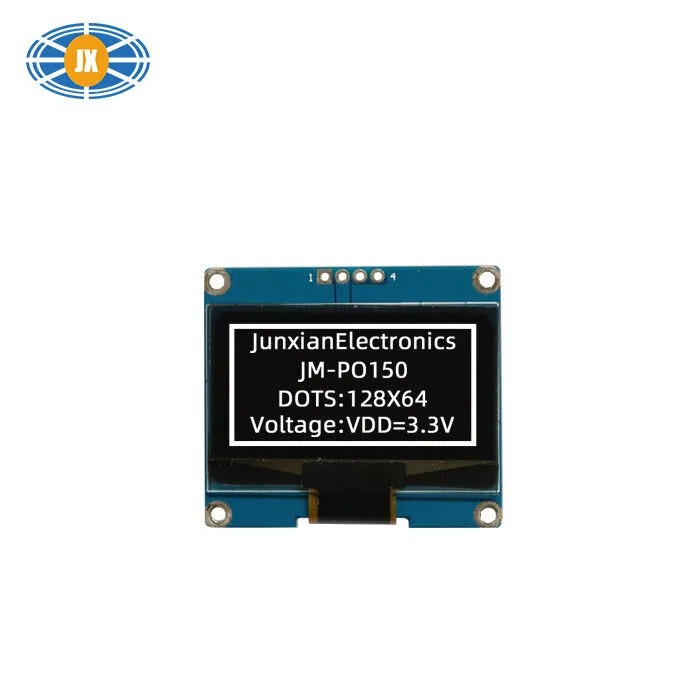
Monochrome Dot Matrix 1.54 Inch OLED Display 128x64 Pixels I2C Interfa
JM-PO150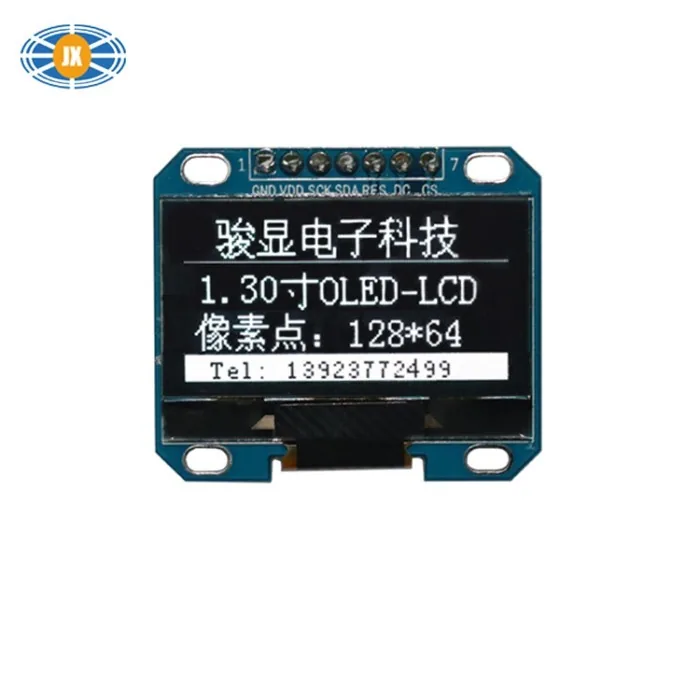
1.3 Inch OLED Display Module 128x64 160° Viewing Angle Lcd Monitor Wit
JM-PO139-01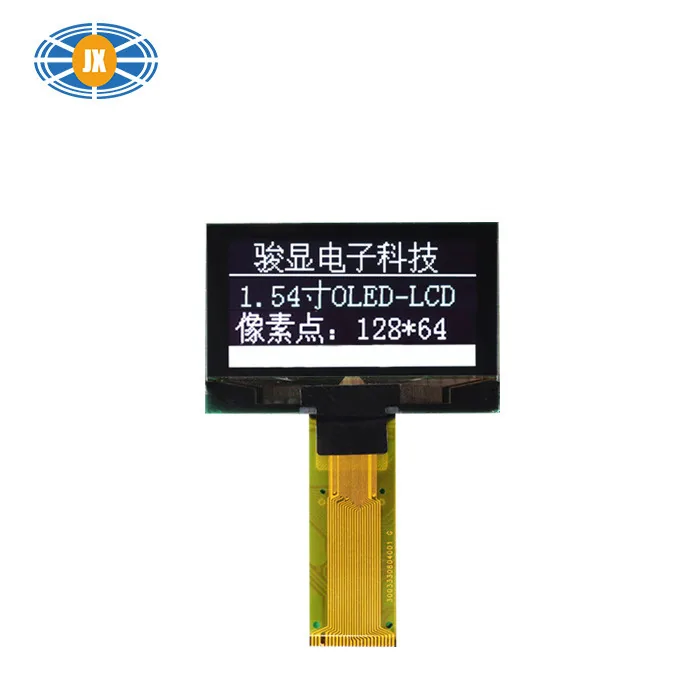
Compact 1.54 Inch OLED Display Module Power Efficiency LCD Monitor Wit
JM-PO139-01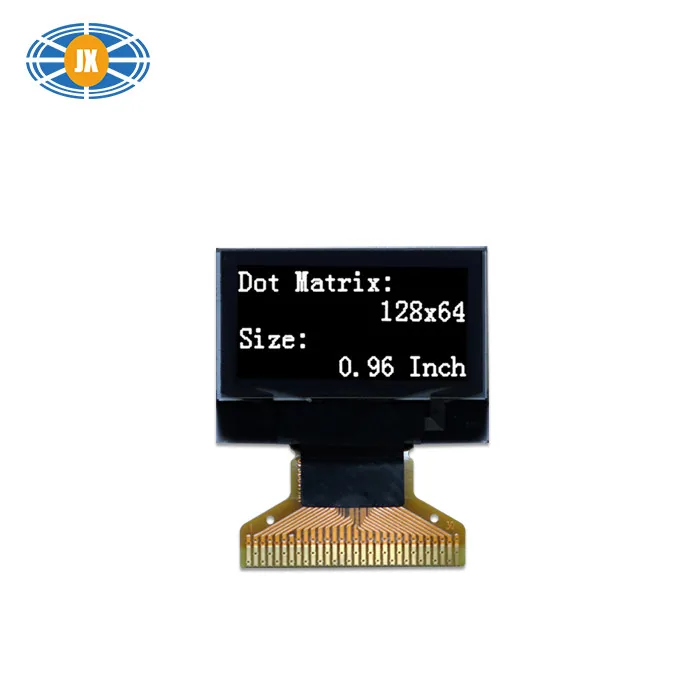
0.96 Inch OLED Display Module 128x64 White Monochrome LCD Monitor For
JM-PO122-00Related guides
TN, IPS, VA and STN: Which Glass Mode Should You Specify?
Glass mode decides how the display looks from where the operator actually stands. IPS holds colour and contrast off-axis and is th...
How Many Nits Does a Sunlight-Readable Display Need?
Short answer: 200-300 cd/m² indoors, 350-450 cd/m² for shaded outdoor or a window-lit factory, and 500 cd/m² or more - or a transf...
When Your LCD Goes End-of-Life: Finding a Replacement
An EOL notice on a display is not a purchasing problem, it is a re-qualification problem. The fastest route is to define the repla...
Questions engineers ask us about this
What temperature range do your standard LCD modules cover?
-20 °C to +70 °C operating with storage to +80 °C on standard industrial parts, and -40 °C to +70 °C operating with storage to +85 °C on wide-temperature parts. Every published model's exact rating is on its product page.
Will an LCD be damaged if it gets colder than its rating?
Usually not - it stops displaying properly and recovers when it warms. The risk is operational, not physical: an unreadable screen at start-up on a cold morning. Storage ratings are wider than operating ratings for exactly this reason.
Do I need a heater for outdoor equipment?
Only if the display must be readable immediately at the coldest ambient. A wide-temperature panel covers most outdoor cases on its own. Tell us the coldest start-up temperature and how fast the UI must be usable, and we will say which of the two you actually need.
Does high temperature shorten the display's life?
Yes, mostly through the backlight - LED lifetime falls as junction temperature rises, so the 40,000-hour figure assumes a sane thermal design. In a sealed enclosure, brightness, venting and expected lifetime have to be decided together.
Can you make my current model in a wide-temperature version?
Sometimes the same glass exists in a wide-temperature build, sometimes it means a different part with a different outline. Send the model you use now and the range you need, and we will tell you which of the two it is before you redesign anything.
Need a quote or a datasheet?
Send us size, resolution, interface and annual quantity. Our engineers reply within one working day. Sample MOQ 5 pcs, lead time 10-20 days.