
Quality control
Display modules fail in a small number of predictable ways: dead pixels, mura, weak or uneven backlight, cold-solder FPC joints, touch drift and ESD damage. Our inspection is built around finding those, at the step where they are cheapest to catch.
Source: 1688.com verified store data, August 2026. These are platform-recorded transaction metrics for our verified store, not self-reported figures - which is precisely why we quote them rather than a hand-written defect rate.
Where we inspect, and what for
| Stage | Checked | Catches |
|---|---|---|
| Incoming | Glass grade, driver IC part and date code, FPC dimensions, LED bin, touch sensor | Wrong or substituted parts before they reach the line |
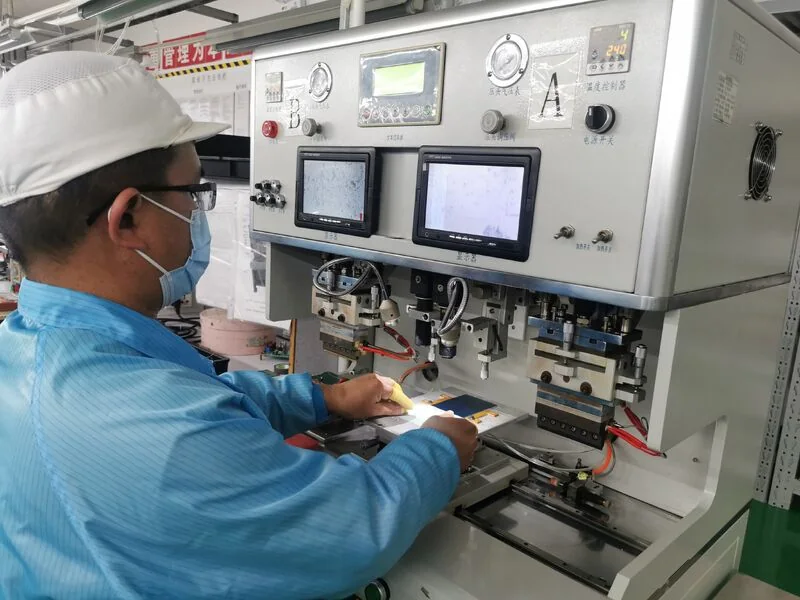
| After COG bonding | Alignment, bonding strength, conduction | Open or intermittent driver connections |
| After backlight assembly | Luminance, uniformity, colour temperature, foreign particles | Dark corners, bright spots, dust inside the stack |
| After touch bonding | Bubbles, particles, touch linearity and edge response | Bonding defects that only show under bright light |
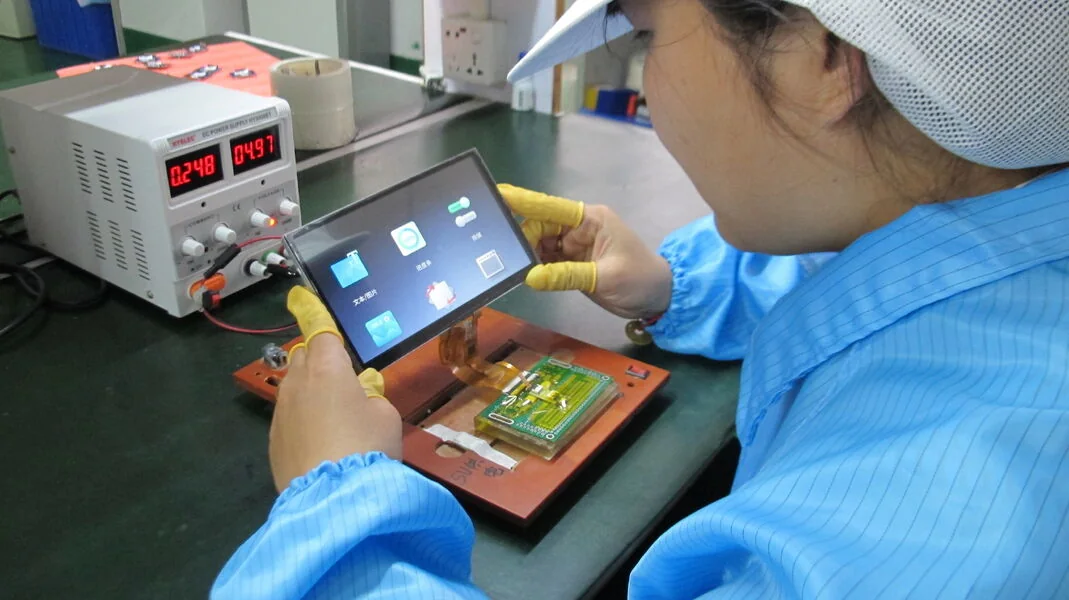
| Functional test | All pixels, interface timing, initialisation, contrast | Dead or stuck pixels, mura, timing incompatibility |
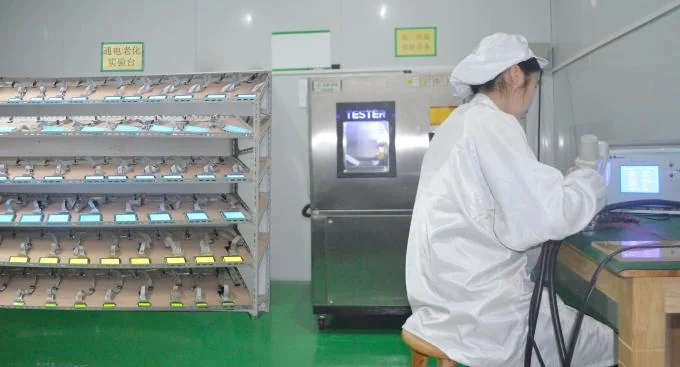
| Ageing | Powered operation on racks | Early-life failures - the ones that would otherwise fail at your customer |
| Final QC | Sampling against the approved reference sample, dimensions, marking | Batch-to-batch drift |
| Packing | Anti-static bag, foam tray, carton marking | ESD and transport damage |
Three of those stages on our own line:
The approved sample rule
For every model we build for you, one approved sample is kept as the physical reference. Batch two is compared against it, and so is batch twelve. This is the mechanism that stops the slow drift buyers complain about most: a display that is subtly dimmer or a slightly different white point a year later, with no change notice.
Change control
If a driver IC goes end-of-life or a glass source changes, you are told in writing before the change reaches your order - not after. For industrial customers we hold the glass and driver combination for running projects. See the EOL and long-term supply guide for how that works in practice.
Quality management system
We operate a documented iso 9001:2015 certified to ISO 9001:2015, certificate No. U24Q2GZ8029389R0S. The certificate copy, issuing body and certificate number are sent on request - see certifications for what we hold and how to verify it. Parts used in our modules are RoHS and REACH compliant, with material declarations available for your compliance file.
Frequently asked questions
Do you test every module or only samples?
Every module is powered and visually inspected for dead pixels, mura and backlight uniformity before packing. Sampling inspection against the approved reference is done per batch, plus ageing on powered racks.
What happens if a batch has a problem?
Tell us the defect, the quantity affected and the batch marking on the carton. We ask for photographs or a short video, identify the process step involved, and agree replacement or credit. We keep the approved sample and batch records so the comparison is factual.
Can you work to our incoming inspection standard?
Yes. Send your AQL levels and defect definitions with the order and we will confirm what we can meet before you place it, rather than discovering a mismatch at goods-in.
Do you provide test reports?
Initial sample reports for new or modified models, and RoHS/REACH material declarations for the parts used. Ask for them with the order so they ship with the goods.
Need our inspection standard in writing?
Ask for the inspection plan and the initial sample report format before you order, so goods-in has no surprises.