
The factory behind the modules
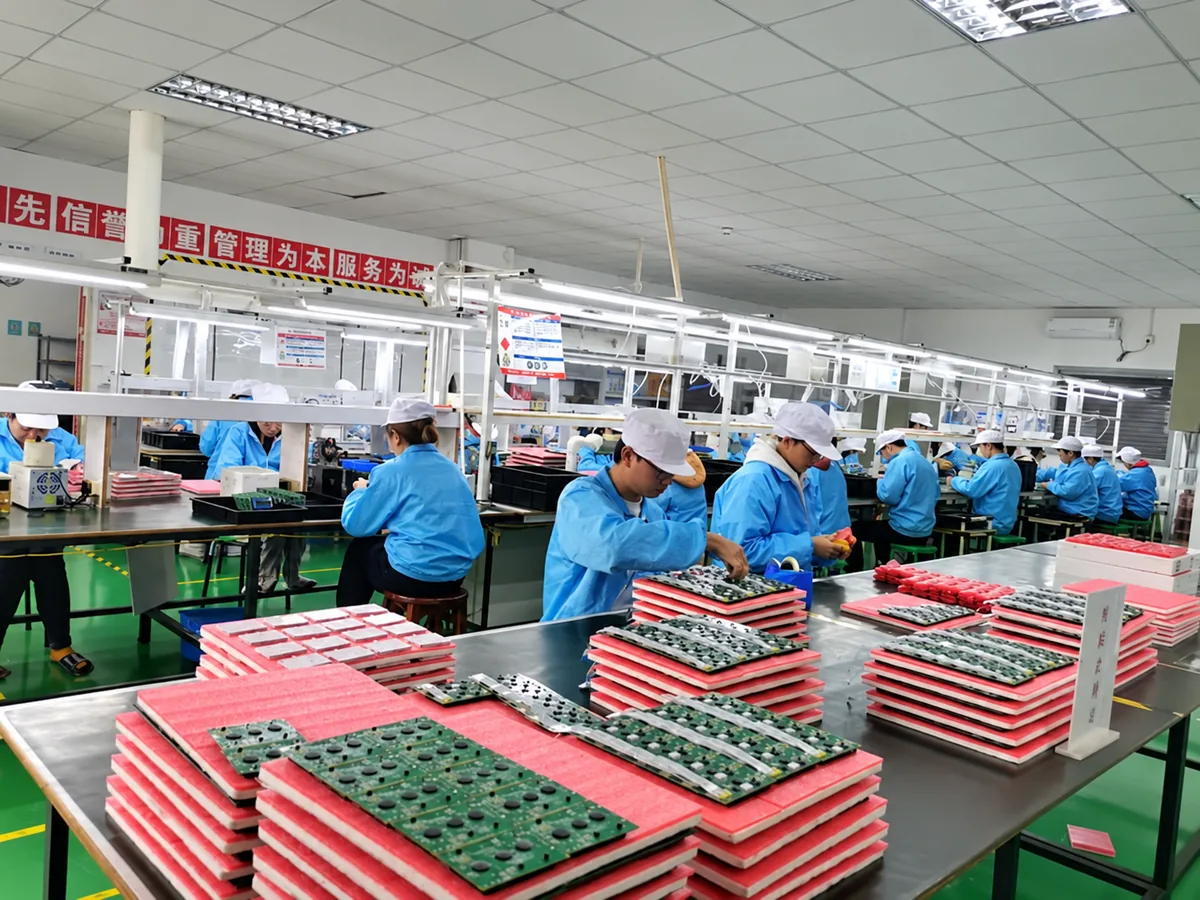
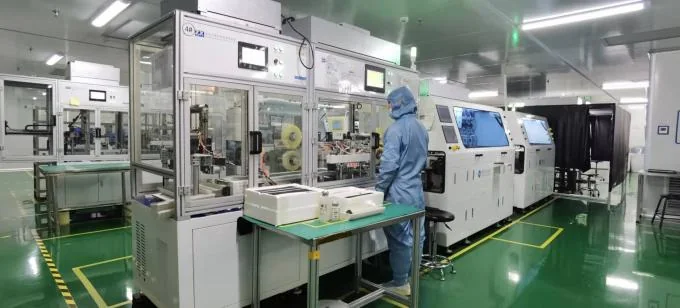
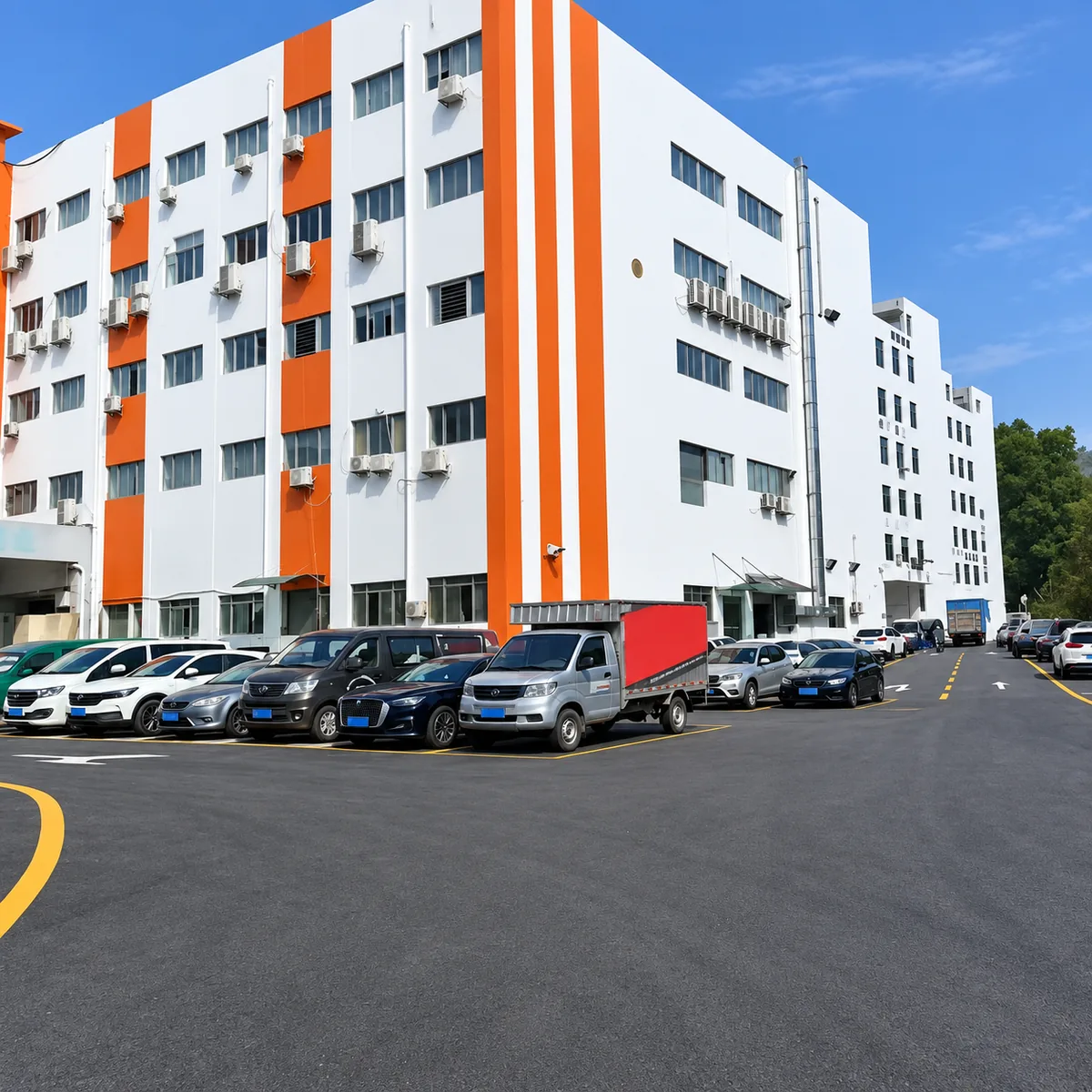
1,500 m² production floor, 3 assembly lines, 19 machines and 52 staff including 6 engineers. Since 2005 we have done one thing in one building in Bao'an, Shenzhen: build display modules for other people's products. What started as monochrome LCDs for meters is now 188 models across 33 screen sizes - TFT, OLED, character, COG and custom segment glass - built by 52 people on 3 lines, forty minutes from Bao'an airport. This page is the plant, the story and the paperwork, photographed as it actually is.
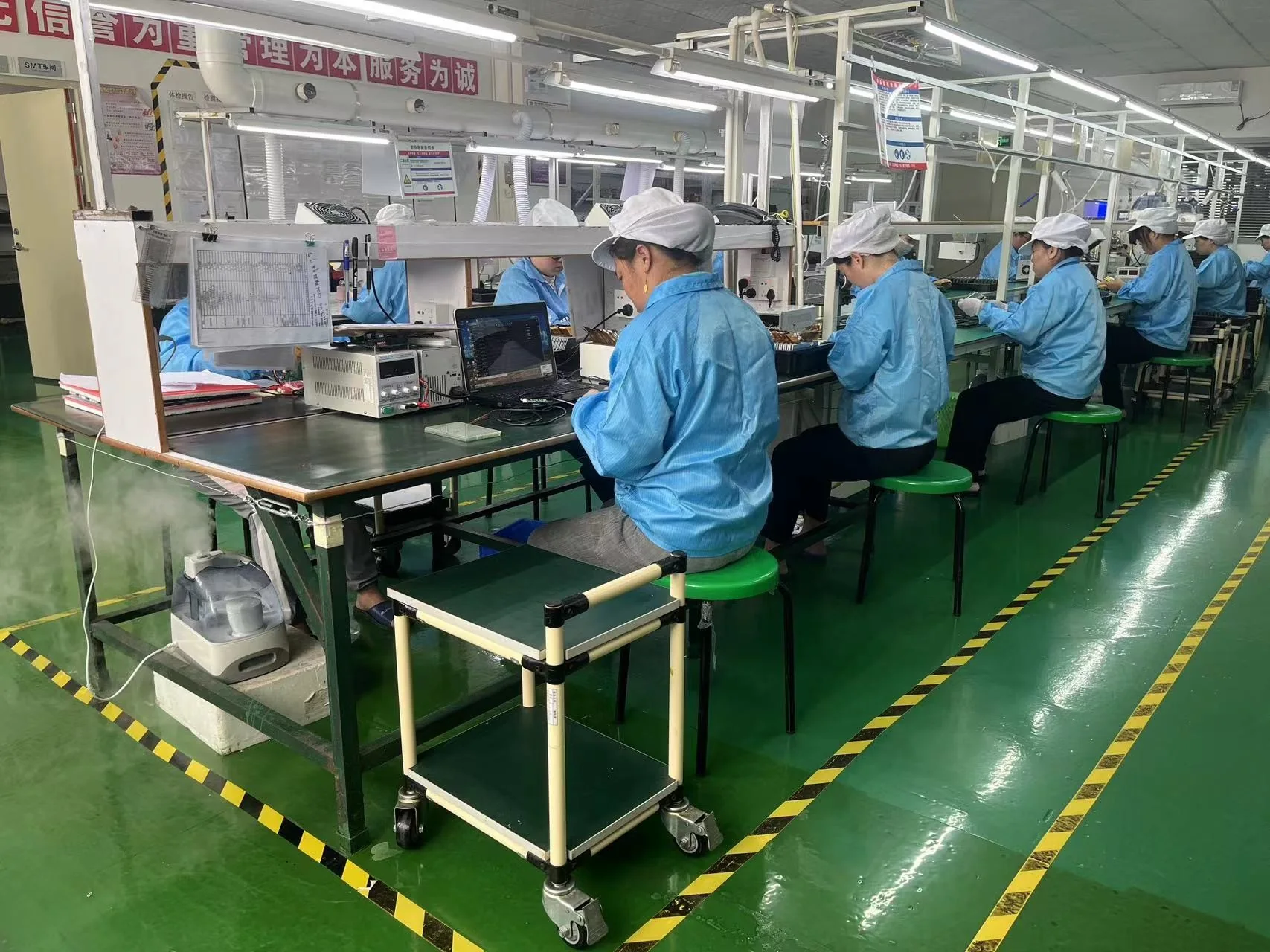
Twenty years in five rows
Factories like talking about themselves in superlatives. We would rather show you the shape of the company and let you decide - so here is the whole history, including the parts a marketing department would airbrush.
| 2005 | Company registered in Shenzhen, starting with monochrome LCD modules for instruments and meters. |
|---|---|
| 2013 | First export orders; overseas customers become a significant share of output. |
| 2016 | TFT colour and OLED module series added alongside the monochrome lines. |
| 2021 | A dedicated R&D arm set up for complete display solutions - module plus driver board plus firmware, rather than glass alone. |
| 2024 | Quality management system certified to ISO 9001:2015, certificate U24Q2GZ8029389R0S - first certification 19 March 2024. We had been running the plant for 19 years by then; the certificate dates from 2024 and we do not backdate it. |
| 2026 | 188 models in current production; roughly 120 new models developed per year. |
Registration date 2005-07-05 and business scope are on the business licence, published in full. The intermediate years are as stated by company management.
What leaves this building, and who takes it
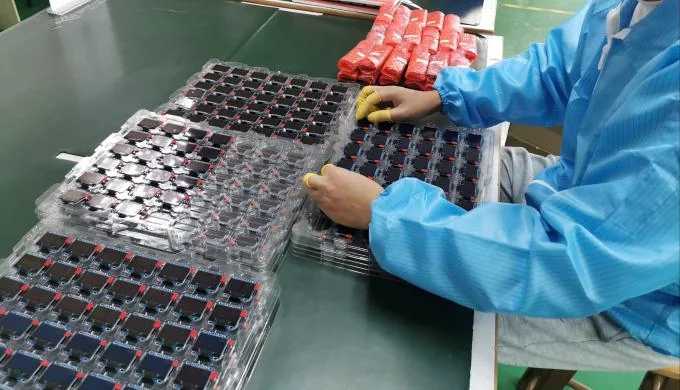
The product is the display module inside someone else's product: TFT and IPS colour panels, OLED modules, graphic LCD and character modules, and fully custom segment glass from 0.96" - 15.6", together with the FPC, backlight, touch panel and cover glass around them. The customers are equipment makers rather than distributors - industrial automation and HMI builders, instrument and metering manufacturers, energy-storage and EV-charging companies, handheld terminal and POS makers, appliance brands and medical device manufacturers. Several are listed companies in China; others are European and North American firms shipping a few thousand units a year.
We do not publish customer names, and we are suspicious of factories that do. Buyers who need references can ask during quotation and we will arrange what the customer in question has agreed to.
One distinction matters more than any number on this page: we are the manufacturer, not a trading company. When your enclosure does not fit or your MCU cannot drive the interface, the question is who can actually change something - and because the line is ours, a modified FPC or a different backlight current is a scheduling decision made downstairs, not a negotiation with someone else's factory.
What a plant this size is honestly good at
1,500 m² makes us a mid-sized module plant, and the honest version of what that buys you helps you decide faster than a page of superlatives.
Where we win
- Small and mid-volume orders are routine. Runs of a few hundred to a few tens of thousands fit our line planning. Large panel fabs generally decline them.
- Changeovers are quick. 3 lines and Yes in-house sampling mean a modified FPC does not wait behind a month of scheduled volume.
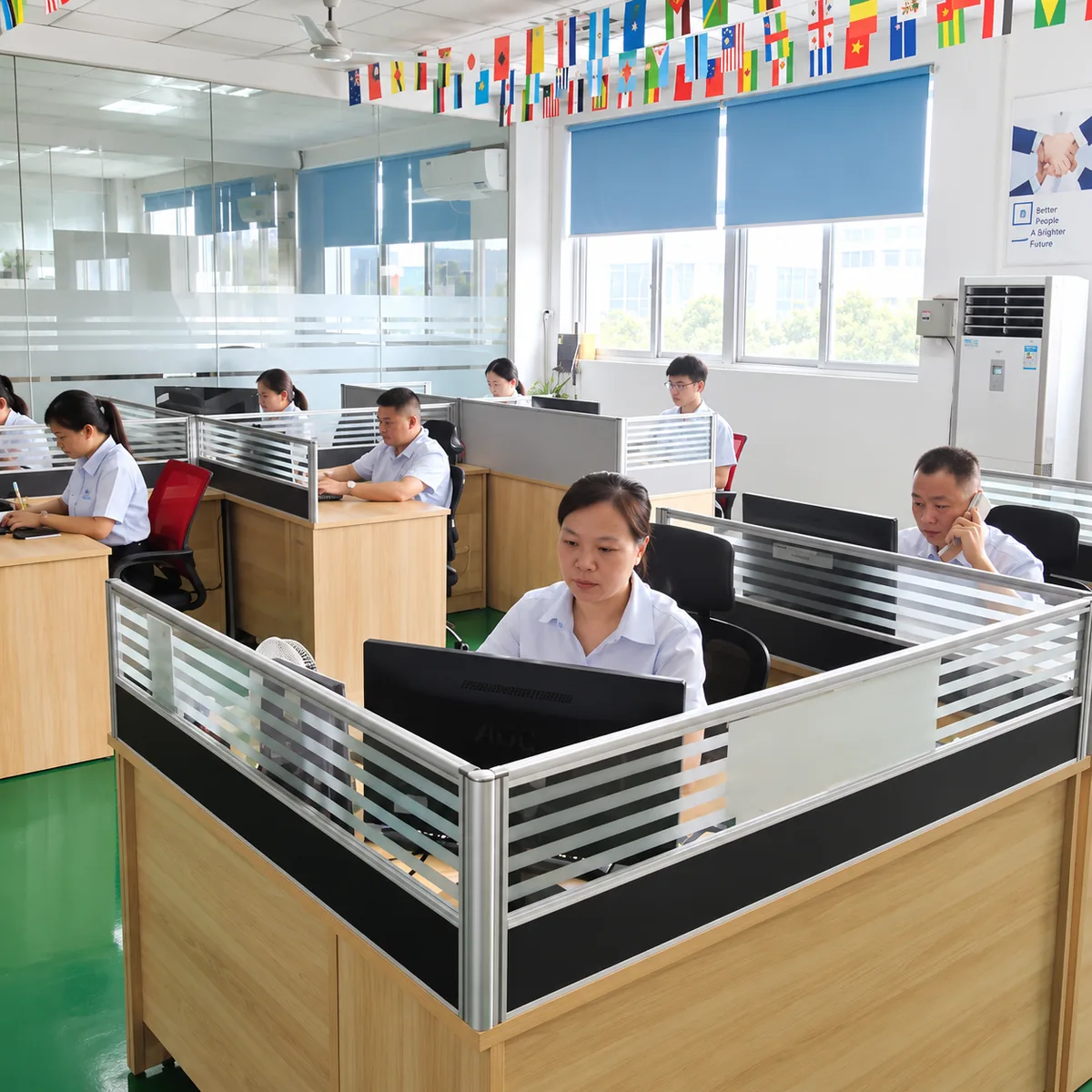
- The people who quote you are in the same building as the line. Feasibility answers come from production, not from a sales database - usually the same day.
Where we do not
- We do not make the glass. Almost no module house does. We buy TFT and OLED panels from panel makers and build the module: bonding, FPC, backlight, touch, driver, testing, packing. Custom segment glass is made to our order at partner glass lines.
- We are not the cheapest at very high volume. At hundreds of thousands of units a year, a larger plant will beat us on unit price. Below that, our overheads and changeover speed put us ahead.
Follow an order through the building
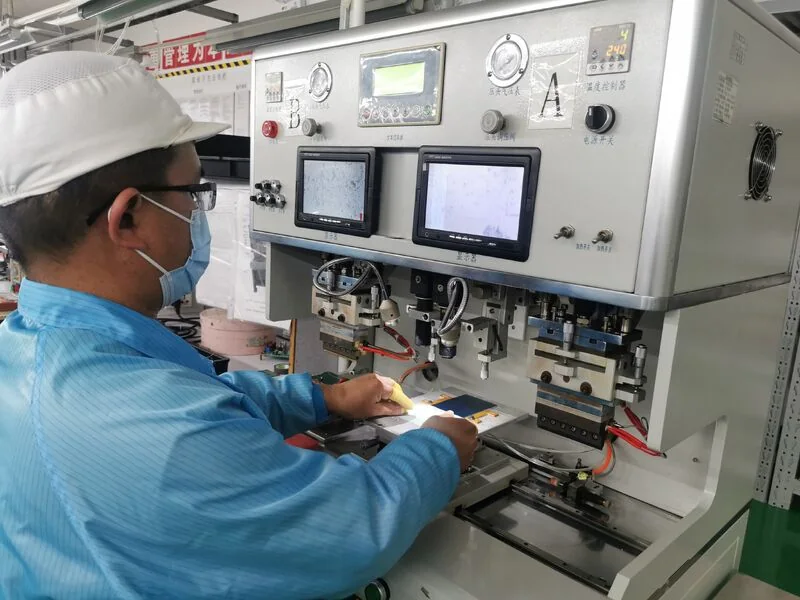
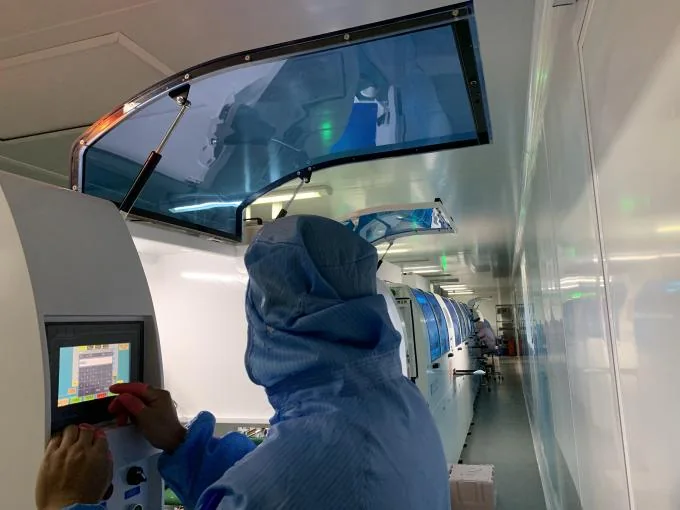
Every module that ships makes the same journey. Glass, driver ICs, FPCs, LEDs and touch panels arrive and are checked against the approved specification before they touch the line. The driver IC is bonded to the glass - COG or COF, with alignment and bonding-strength checks - then the FPC goes on, the backlight is built and fitted, and the module is framed. Where the order specifies touch, the sensor and cover glass are bonded, air-gap or optical, in a controlled environment that keeps particles out of the stack.
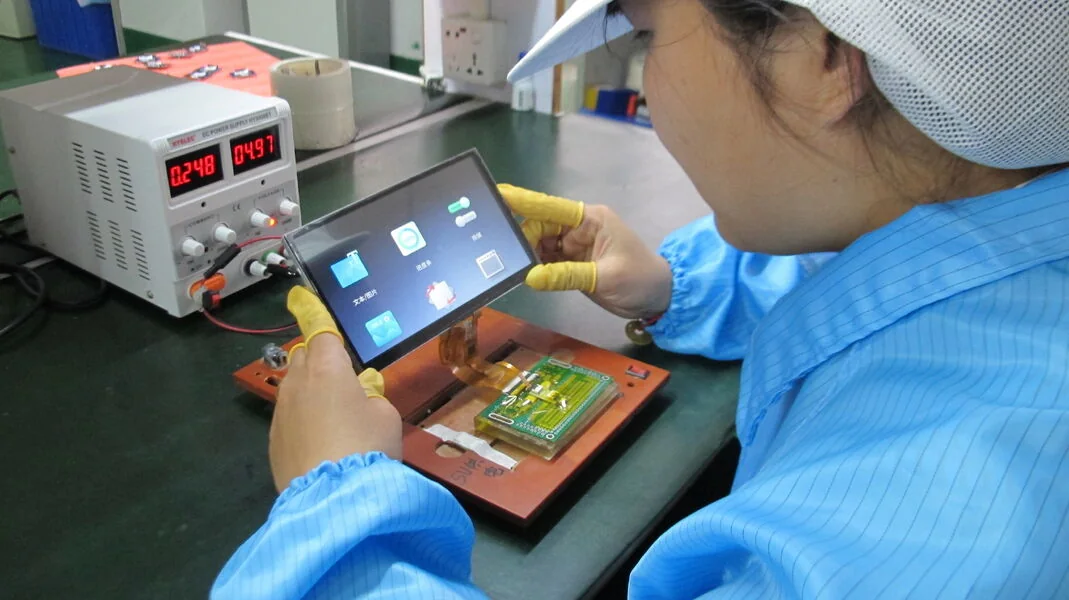
Then every single module is powered on and inspected - dead pixels, mura, backlight uniformity, contrast, interface response - before spending time on the ageing racks and passing a final sampling inspection against the approved reference. Packing is Anti-static bag + foam tray + export carton: anti-static protection is not optional on driver-bonded modules. The photographs below are those steps on our own line.
The journey, photographed
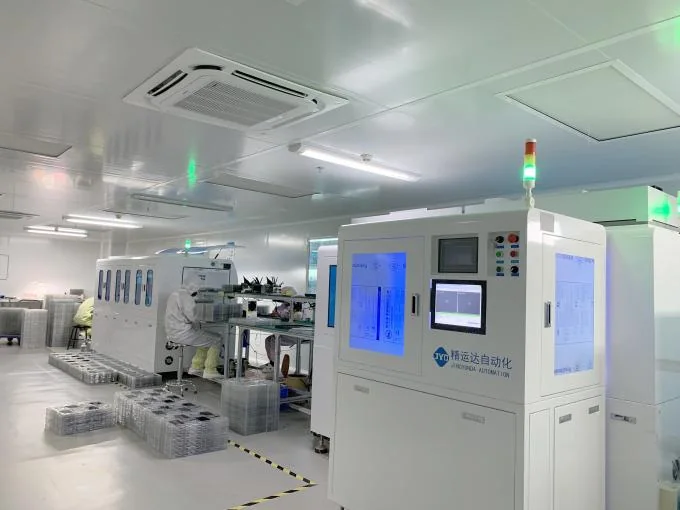
Bonding to packing, on our line - not stock imagery.
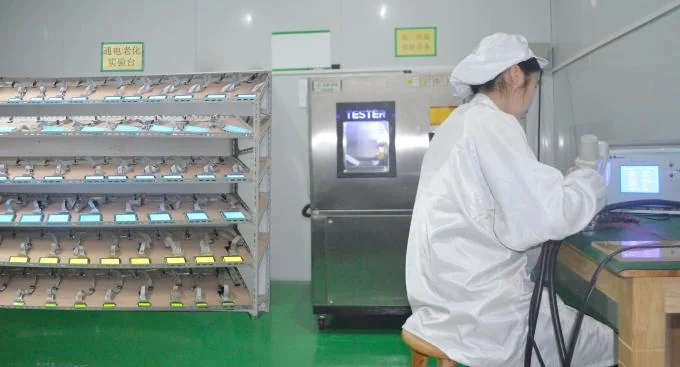
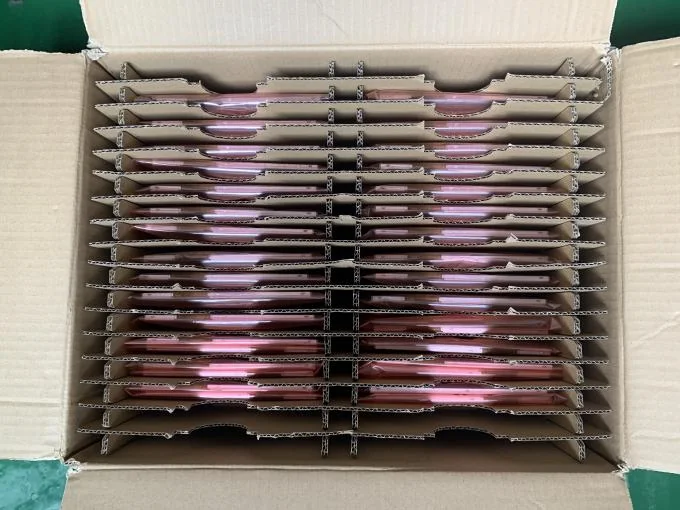
Test and measurement
The equipment behind the numbers we put on a datasheet. If a spec on our page matters to your design, ask which of these we used to check it - see quality control for the inspection plan.
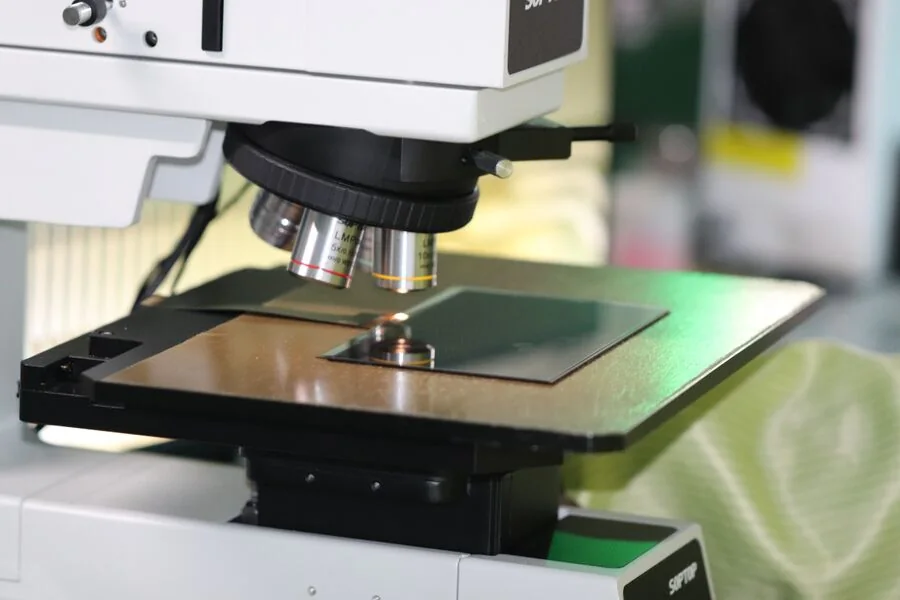
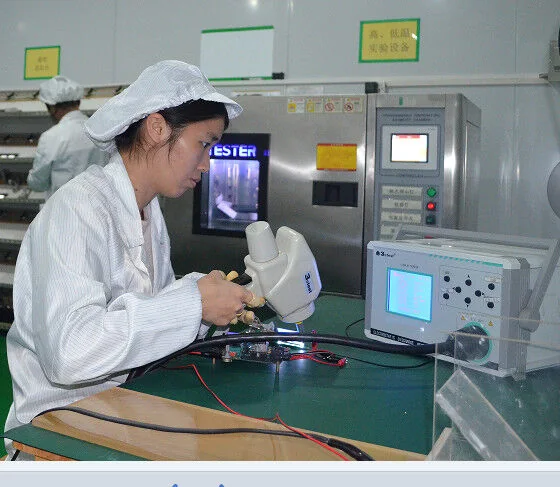
Bonded areas are checked on the same measuring microscope after COG bonding — see the bonding station in the row above.
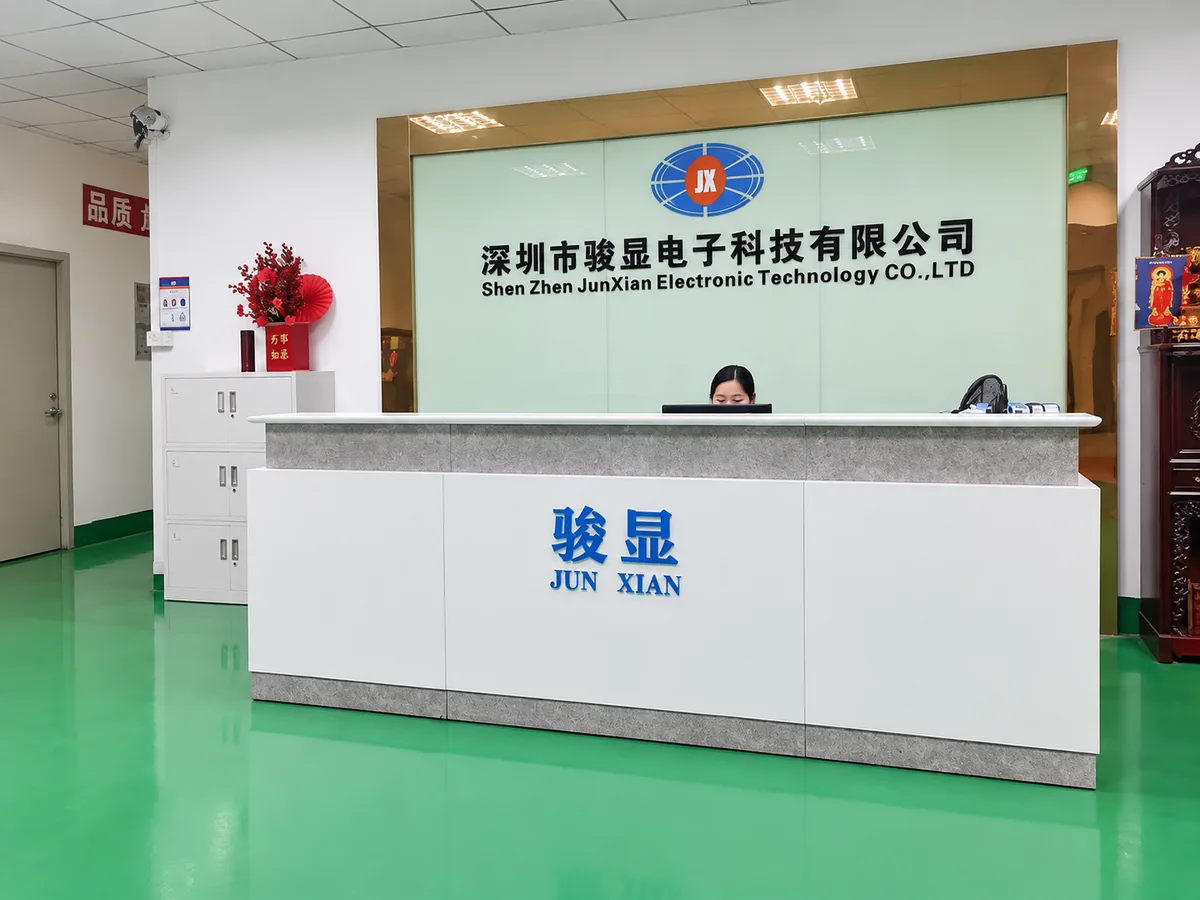
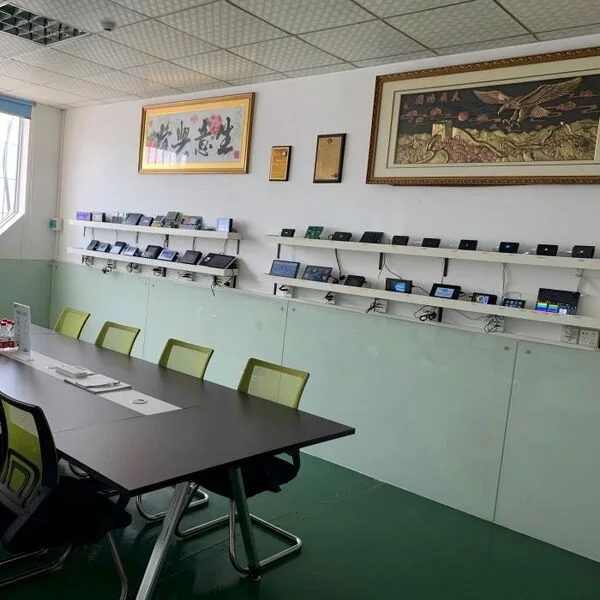
The rest of the building
Sales, engineering and the line under one roof - the whole reason a feasibility answer comes back the same day.
How we behave when you order
Before the order. Technical questions get technical answers. If a standard model does the job, we say so rather than quoting custom tooling.
During production. The approved sample is the reference. Changes to glass, driver IC or backlight on a running project are notified in writing before they happen.
After delivery. Engineering support for integration problems - interface timing, initialisation code, mechanical fit. Most of these are solved in a day by email.
Check everything on this page
Claims about a factory are cheap; here is how to verify ours:
- Business licence, unified social credit code 91440300777163896P, registered 2005-07-05 - scan published
- ISO 9001:2015 certificate No. U24Q2GZ8029389R0S, GICG (Guardian Independent Certification Ltd), valid to 18 March 2027 - scan published
- CTI RoHS verification report No. A2260556881101 on a submitted sample - scan published
- Plant, staff, equipment and production line figures from our verified manufacturer profile on 1688.com, August 2026
Numbers we cannot yet document, we do not publish. If a supplier's website gives you a monthly capacity figure with no unit and no basis, ask what it is measured in.
Come and see it
Customers are welcome. The address is 3rd Floor, Building A, Tiegang Yicheng Industrial Park, Xixiang Sub-district, Bao'an District, Shenzhen, Guangdong, China. Tell us which line or process you want to see and we will make sure it is running when you arrive. If travel is not practical, ask for a live video walkthrough - we do these regularly, including on the batch that is building your order.
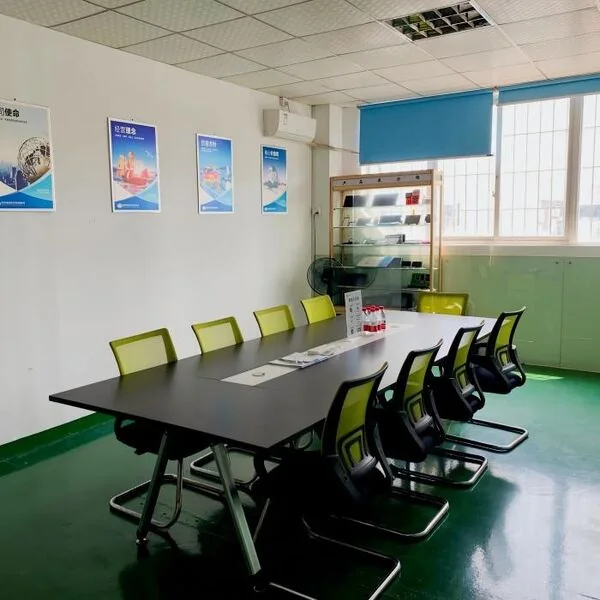
About these photographs. They are our own building, line and equipment. They are not a substitute for seeing the plant: if you want a specific station, a specific machine or the batch with your order on it, ask and we will show it live on video rather than send you a nicer photo.
See for yourself
Ask for the business licence, the ISO certificate, a live video tour of the line - or book a visit. All of these are normal requests and we answer them daily.