
TN, IPS, VA and STN: Which Glass Mode Should You Specify?
Glass mode decides how the display looks from where the operator actually stands. IPS holds colour and contrast off-axis and is the safe default for a panel people approach from any direction. TN is cheaper and faster but wants to be looked at straight on. VA and VATN give a near-black background and the most premium front panel. STN and FSTN are the monochrome workhorses where power and cost matter more than colour.
Written by the Junxian applications engineering team. Figures quoted for “our models” are calculated from the 103 models on this site that carry a full parameter set, so they change when the catalogue changes.
What is the difference between TN, IPS and VA?
All three are liquid crystal modes - different ways the crystals are arranged and switched - and the arrangement decides the viewing cone, the contrast and the response time. TN twists the crystal 90 degrees and switches fastest; it is the cheapest to make and its weakness is that contrast and colour shift as you move off axis, particularly from below. IPS switches the crystals in the plane of the glass, so what you see barely changes across a wide cone - that is why it dominates modern panels. VA aligns them vertically, blocking light more completely in the off state, which gives the deepest black and the highest contrast ratio, at the price of slower response.
TFT vs IPS: why that is not really a choice
The two words describe different layers of the same panel. TFT - thin-film transistor - is the active-matrix backplane: one transistor per sub-pixel, holding its charge between refreshes, and almost every colour LCD module is built on one. IPS, TN and VA describe the liquid crystal on top of that backplane. So an IPS panel is a TFT panel, and the comparison that matters when you specify is IPS against TN or VA. A listing that says only 'TFT' is often a TN panel - check the glass-mode line of the specification. On our product pages the display type is its own row for exactly this reason, and our IPS guide goes through what IPS changes in numbers you can put in a specification.
Which one should I actually specify?
Ask where the operator's eyes are. A machine panel read from below while someone stands beside it, a handheld tilted in the hand, a display in a lid that opens to different angles - all IPS. A fixed console the user sits in front of, where cost matters more than the last few degrees of viewing angle - TN is honest engineering, not a downgrade. A front panel that should look black and premium when switched off, with bright characters when on - VA or VATN segment glass. A meter that has to run for years on a battery - monochrome STN or FSTN, and skip the backlight where daylight will do.
What our published models actually use
Generic comparisons stop being useful when it is time to order, so here is the mix across our own catalogue - what exists, in which sizes.
| Glass mode | Models | Sizes on our catalogue | What it is for |
|---|---|---|---|
| IPS | 47 | 0.96" - 10.1" | Colour stays stable when the panel is read from an angle. Our default for anything an operator does not look at straight on. |
| TN | 19 | 1.77" - 7" | Cheapest colour glass, narrower usable viewing cone, fastest response. Fine when the viewer sits in front of the screen. |
| FSTN | 7 | 2" - 3.2" | Monochrome with film compensation - higher contrast and a neutral background than plain STN. Used on our COG graphic modules. |
| STN | 20 | 2" - 5.7" | Monochrome workhorse: low power, low cost, blue or yellow-green background. Character and COG modules. |
Read from the display type field of each published model. Some models are listed as a combination (IPS/TN, STN/FSTN) because the same glass is offered both ways - those are counted under each mode they support.
Viewing direction: the parameter people forget
Monochrome STN and segment glass has a preferred viewing direction, usually written as 6 o'clock or 12 o'clock. It is a physical property of the glass, decided when the part is made, and it cannot be changed in firmware. A panel-mounted meter read from above and a handheld read from below need opposite builds. If your product is sometimes wall-mounted and sometimes desk-mounted, say so - a wide-view or all-o'clock build exists and should be chosen deliberately rather than discovered at the sample stage.
Contrast ratio is measured in the dark - your product is not used there
Datasheet contrast is measured in a dark room. In a lit room, ambient light reflecting off the surface raises the black level and the effective contrast collapses long before the datasheet number becomes relevant. That is why an anti-glare surface or optical bonding often does more for perceived quality than choosing the glass mode with the biggest contrast figure - and why we ask where the display sits before recommending a mode.
Response time: when it matters and when it does not
TN is fastest, VA slowest, IPS in between. For an HMI showing values, a menu or a gauge, none of them is too slow. It becomes real in two cases: sub-zero operation, where liquid crystal response slows dramatically and a VA panel can visibly smear at -20 °C; and any moving content such as a camera preview. If your product does either, raise it early - it changes the recommendation more than the room-temperature datasheet line suggests.
What this costs
Roughly, and in the order you will feel it: monochrome STN and FSTN are the cheapest, TN colour next, IPS a step up, and custom VATN segment glass carries tooling (1,000 pcs) but a very low unit cost at volume. The mode is rarely the biggest line in a display quotation - size, touch and brightness usually are - so choosing TN to save money on a panel that needs IPS is a poor trade. Choose the mode for the viewing geometry, then control cost with size, brightness and touch.
IPS models published on this site
Published models that illustrate the point above - full specifications on each page.
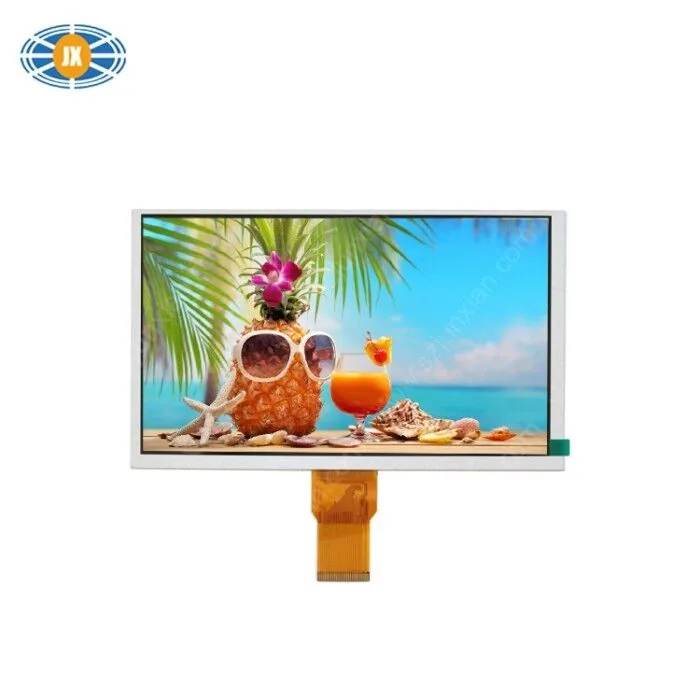
9 Inch TFT Display 1024x600 Touch Screen LCD Monitor For Industrial /
JM-PT144-00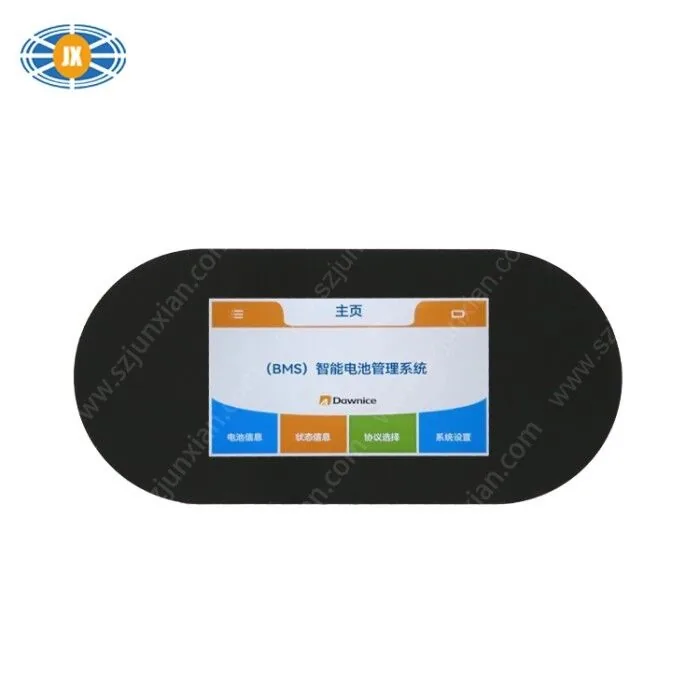
4.3 Inch BMS Serial Port Capacitive LCD Touch Screen 5V Full View Clea
JM-LH018-00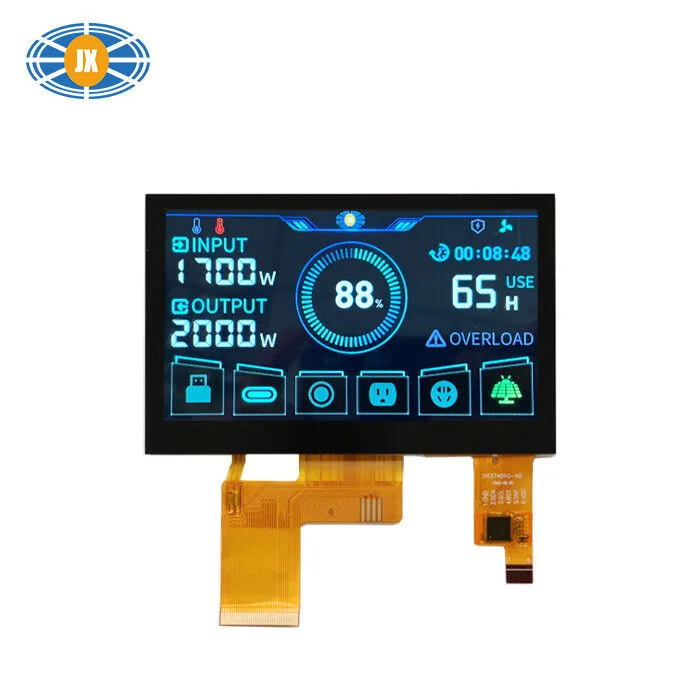
Customized TFT LCD Touch Screen 8 Bit RGB Interface 4.3 inch Capacitiv
JM-PT105-01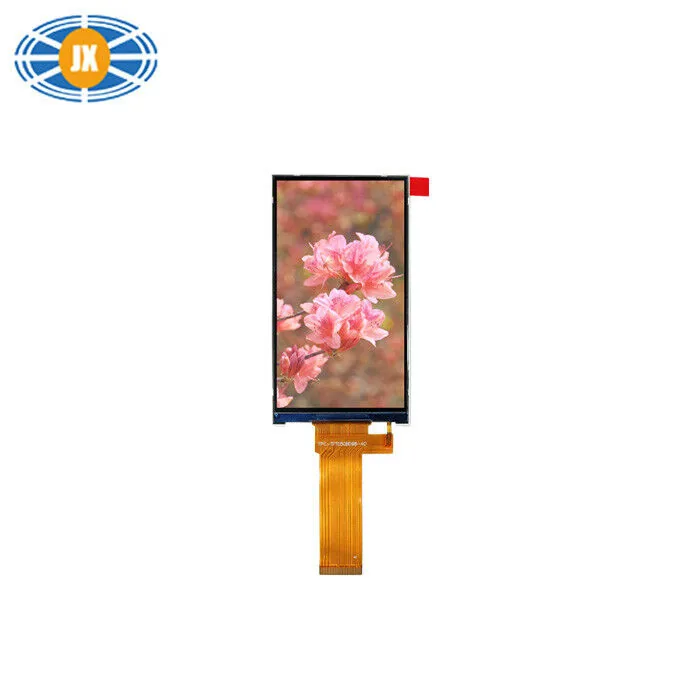
300cd/m2 5 Inch TFT LCD Monitor , IPS LCD Display Module 480x854 Pixel
JM-PT128-00Related guides
What Is an IPS Display? IPS LCD Modules Explained for Engineers
IPS - in-plane switching - is a way of arranging the liquid crystal in a TFT LCD so the picture barely changes when you look at it...
How Many Nits Does a Sunlight-Readable Display Need?
Short answer: 200-300 cd/m² indoors, 350-450 cd/m² for shaded outdoor or a window-lit factory, and 500 cd/m² or more - or a transf...
Wide-Temperature LCD Modules: Designing for -40 to +85 Celsius
Standard commercial panels stop around 0 °C. Our standard industrial parts run -20 °C to +70 °C and wide-temperature parts -40 °C ...
Questions engineers ask us about this
Is an IPS display a TFT display?
Yes. IPS is the liquid crystal mode and TFT is the transistor backplane under it, so every IPS module in our catalogue is also a TFT module. The real choice is IPS, TN or VA.
Is IPS always better than TN?
No - it is better off-axis. If the operator looks at the screen straight on, TN gives the same information for less money and switches faster. IPS earns its premium when the viewing angle varies, which on industrial equipment it usually does.
What is VATN and when should I use it?
Vertically aligned segment glass: black background, bright characters, very wide viewing angle. It is what makes an instrument front look modern rather than like a 1990s calculator. It is custom glass, so it carries tooling and 1,000 pcs.
Which glass mode works best in cold conditions?
All liquid crystal slows down when cold, and VA slows most. For sub-zero operation specify a wide-temperature build and tell us whether the display must be readable immediately at the coldest temperature or only after warm-up - the answers lead to different parts.
Can I get the same size in both TN and IPS?
For several sizes, yes. Tell us the size and resolution and we will say which modes that glass is available in before you commit the mechanical design.
Do you offer transflective glass for daylight?
Yes on monochrome segment and COG glass, and on selected colour panels. It is a glass-level choice made when the part is built, not something that can be added to a finished module.
Need a quote or a datasheet?
Send us size, resolution, interface and annual quantity. Our engineers reply within one working day. Sample MOQ 5 pcs, lead time 10-20 days.