
Smart Serial Display or a Bare TFT with Your Own MCU?
The question is not which display costs less - it is which display plus the engineering time around it costs less, and that answer flips depending on how complex the UI is and how many units you are building. Smart serial modules are the largest interface family on our current catalogue for exactly this reason.
Written by the Junxian applications engineering team. Figures quoted for “our models” are calculated from the 103 models on this site that carry a full parameter set, so they change when the catalogue changes.
What a smart serial module actually removes
A bare TFT panel is a grid of pixels; whoever drives it has to own the frame buffer, the drawing primitives, the font rendering and the update timing. A smart serial module puts a controller and a command set on the module itself, so the host sends an instruction - "set field 3 to 87" - and the module handles the rest. What moves off your BOM and firmware budget: the frame buffer memory, the graphics library, and the engineering time to write and debug it.
The trade-off, side by side
| Item | Bare TFT + your MCU | Smart serial module |
|---|---|---|
| Panel unit cost | Lower | Higher - the controller is built in |
| Host MCU requirement | Needs a display controller or SPI/parallel bus, plus RAM for a frame buffer | Any MCU with a spare UART |
| Firmware to write | Graphics stack, fonts, drawing primitives, update logic | A short list of commands over serial |
| UI flexibility | Full control - anything the panel can display | Bounded by the module's command set |
| Time to first working screen | Weeks, if the graphics stack is written from scratch | Days |
Where the break-even usually sits
This is a project-specific answer, not a fixed volume threshold, but the pattern we see repeatedly is: if the UI is a handful of fields, icons and simple graphs - a meter, a BMS panel, a status display - the engineering time saved by a smart serial module outweighs its higher unit cost well past typical prototype and early-production volumes. If the UI is complex, animated, or genuinely differentiated - think a consumer product's main screen - the firmware investment usually pays for itself and a bare panel with your own driver stack is the better long-run choice. The honest test: if you would have to hire or contract a graphics firmware engineer to hit your schedule, that cost belongs in the comparison, not just the unit price of the panel.
BMS and protocol-specific modules
Battery management and energy storage equipment has a specific version of this problem: the BMS already knows the state of charge, cell voltages and fault flags, and writing a graphics stack just to show numbers it already has is close to pure overhead. Our smart serial line includes modules built for BMS protocols specifically, so the BMS sends values it already computed and the module renders them - see our energy storage and EV charging page for the models built around this.
What you keep control of either way
Mechanical fit, FPC routing, connector position, backlight brightness and touch bonding are all customised the same way on a smart serial module as on a bare panel - the interface decision does not constrain the physical design. What it does constrain is the software architecture, which is why this is worth deciding early rather than after the board is laid out.
Smart serial modules currently in production
Published models that illustrate the point above - full specifications on each page.
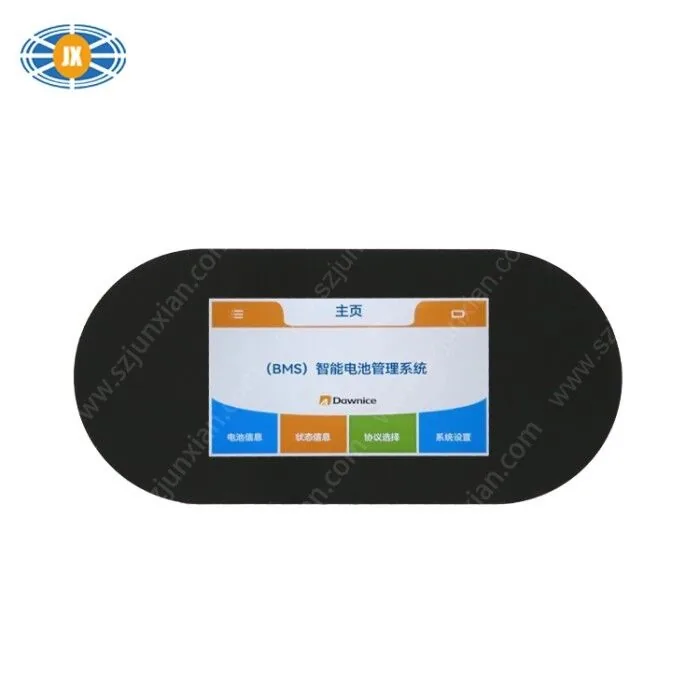
4.3 Inch BMS Serial Port Capacitive LCD Touch Screen 5V Full View Clea
JM-LH018-00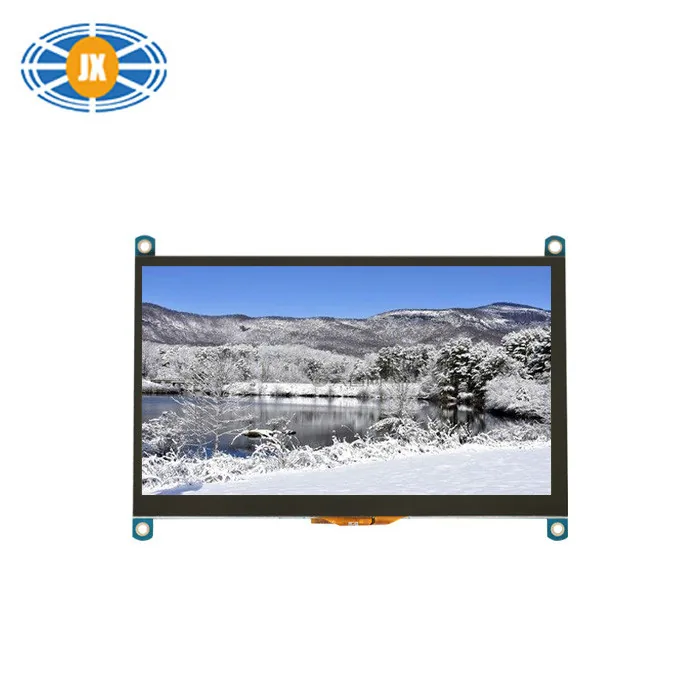
Wide Viewing Angle Smart LCD Module With RGB LCD Interface 300cd/M2 To
JM-GD815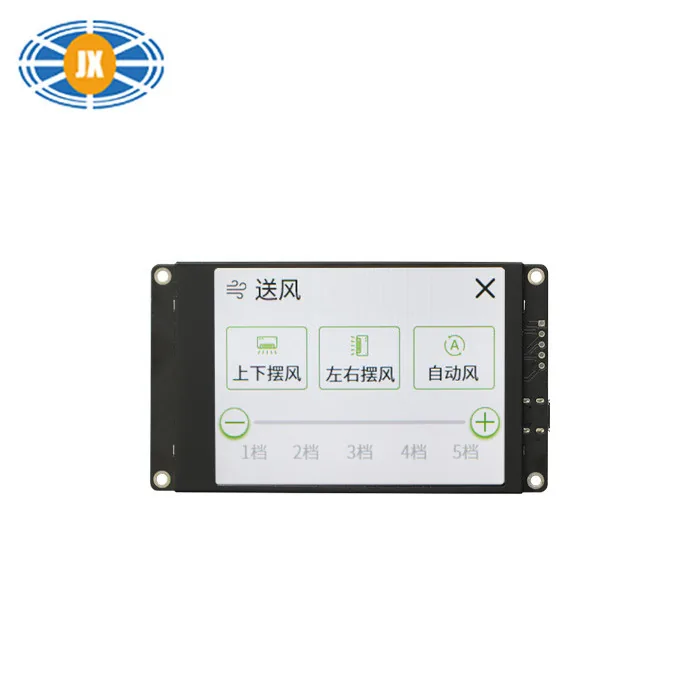
3.5 Inch IPS Display Industrial Serial Port LCD Display Touchscreen LC
JM-LH011-TI320240NUL035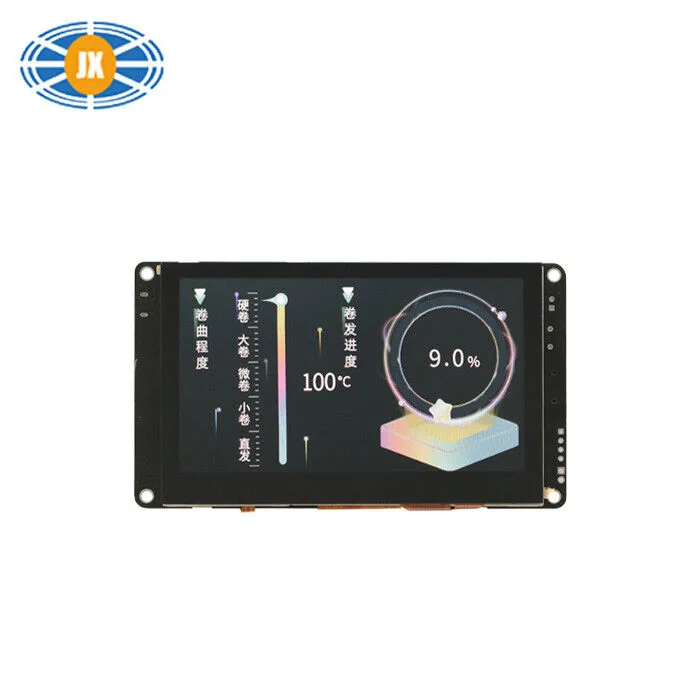
250cd/m2 Serial Port Display 480x272 Versatile Intuitive 4.3 TFT LCD M
JM-LH013-00Related guides
LCD Interfaces Explained: SPI, MCU, RGB, LVDS and MIPI
The interface is the first decision, not the last: it decides whether your processor can drive the panel at all, how many pins the...
Buying Display Modules Without a Datasheet: the Real Costs
A three-dollar module with no documentation is a fine way to try an idea and a poor thing to build a product on. The price differe...
LCD Module MOQ, Lead Time and Sample Policy
Samples 5 pcs. Catalogue models 100 pcs. Fully custom tooled glass 1,000 pcs. Production lead time 10-20 days, samples 10-15 days....
Questions engineers ask us about this
Can I start with a bare panel and switch to smart serial later?
Usually not without a board respin - the interface and pin count are different. Decide this before layout, not after a prototype is already routed.
Do smart serial modules support custom fonts and icons?
Yes - the command set typically includes uploading a font set and simple graphics, not just fixed text. Send us your UI mockup and we will confirm what the command set supports before you commit.
Is a smart serial module always more expensive per unit?
Almost always, because the controller and its firmware are built into the module. The comparison that matters is total project cost at your volume, not unit price alone - see the break-even discussion above.
What happens if my UI grows beyond the module's command set?
That is the sign the project has outgrown a smart serial module - at that point a bare panel with your own graphics stack is usually the right move, even if it means more firmware work. We will tell you directly if we think your UI is at that point.
Need a quote or a datasheet?
Send us size, resolution, interface and annual quantity. Our engineers reply within one working day. Sample MOQ 5 pcs, lead time 10-20 days.