
Buying Display Modules Without a Datasheet: the Real Costs
A three-dollar module with no documentation is a fine way to try an idea and a poor thing to build a product on. The price difference between a marketplace module and a specified one is small; the difference in what you know about it - and about the next thousand of it - is the actual product. This guide is about what that knowledge is worth in engineering hours. It is not an argument against cheap modules for prototypes - we say so explicitly below.
Written by the Junxian applications engineering team. Figures quoted for “our models” are calculated from the 103 models on this site that carry a full parameter set, so they change when the catalogue changes.
What a missing datasheet actually hides
Not the marketing numbers - the working numbers: which controller variant is fitted, the RAM window offsets, the init table with its per-glass VCOM and gamma values, the reset timing, the backlight LED configuration and its current limit, the connector pinout with tolerances, and the absolute maximum ratings you are silently violating or not. Every one of those is an evening of reverse engineering when undocumented, and a table lookup when documented.
The controller lottery
Undocumented modules are built from whatever compatible controller is cheapest that month - original one batch, a clone or re-marked part the next. Clones are often close but not identical: an init sequence that ran for months stops working on the new batch, or works except for inverted colours or a shifted window. If nobody told you the controller changed, that surfaces as a field failure or an assembly-line stop, and the debugging starts from zero because nothing on the module says what is actually fitted.
Batch drift you cannot see in a photo
Glass source, backlight LED bin, FPC revision and connector supplier can all change between orders of a nominally identical module. Colour temperature shifts, brightness drops a bin, the flex gets 2 mm shorter, a mounting hole moves. None of it is malicious - it is normal supply-chain motion that documented suppliers manage with change notices and undocumented channels simply pass through to you. Whether that matters depends on your product; whether you hear about it in advance depends on your supplier.
What buying from the factory changes, concretely
Four things, and they are process rather than promises: a real datasheet for the module as shipped; the verified init table for the batch you received; notice before a controller, glass or mechanical change reaches your order - so firmware is updated on your schedule, not the line's; and an end-of-life path with last-buy notice and a replacement proposal rather than a listing that silently disappears. Our EOL guide covers the last point in depth.
The catalogue behind that claim
Documentation only counts if it exists per model, so here is the depth of what is published on this site - every model with a full parameter set, specifications on the page rather than in a chat window.
| Category | Models published | Sizes | Catalogue MOQ |
|---|---|---|---|
| TFT LCD Display Modules | 36 | 0.96" - 15.6" | 100 pcs |
| LCD Touch Screen Modules | 22 | 2.8" - 10.1" | 100 pcs |
| Smart Serial UART LCD Modules | 5 | 2.8" - 4.3" | 100 pcs |
| OLED Display Modules | 10 | 0.49" - 2.42" | 100 pcs |
| Graphic LCD Modules | 21 | 1.5" - 5.7" | 100 pcs |
| Character LCD Modules | 7 | 3.2" | 100 pcs |
| Round LCD Displays | 2 | 1.28" - 3.4" | 100 pcs |
Catalogue MOQ is the same 100 pcs across categories - the tier is set by whether glass has to be tooled, not by product type.
How to qualify any display supplier - including us
Five questions separate a channel from a source, whoever you ask: Can you send the module datasheet before I pay? Will you name the controller IC and notify me if it changes? Can you supply the init code verified for my batch? What is your process when a part of the module reaches end of life? Can I get the same module, to the same spec, in two years? A supplier who answers all five in writing is quoting you a component; anyone else is quoting you a photo.
When the marketplace module is the right choice
Prototyping, one-offs, teaching, checking whether an idea is worth pursuing: buy the cheap module, enjoy it, and treat every parameter you discover as disposable. The switch point is the moment a respin costs real money - once a carrier board is being laid out around the display, the connector, offsets and controller identity need to be facts on paper. Prototype on anything; commit to something specified.
Models with the controller named on the page
Published models that illustrate the point above - full specifications on each page.
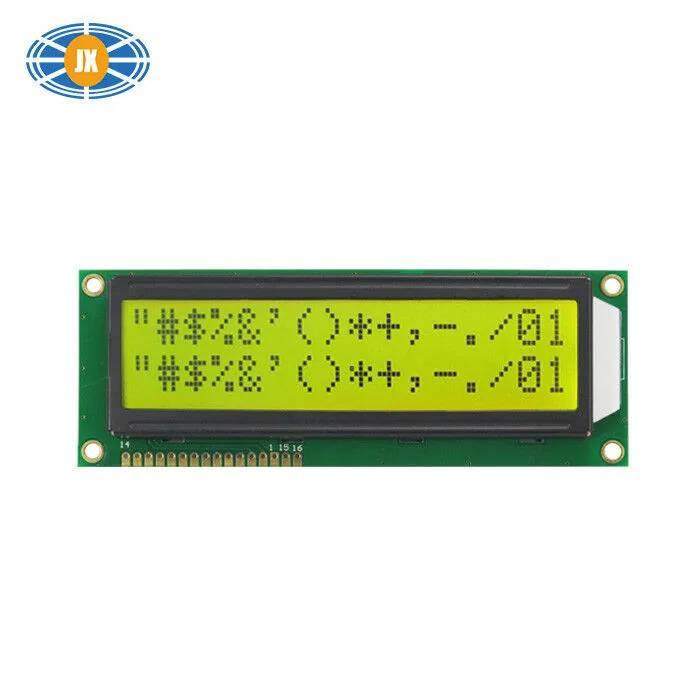
LCD 16x2 Alphanumeric Display 16 PIN Flexible LCD Modules With Multi C
JM1602M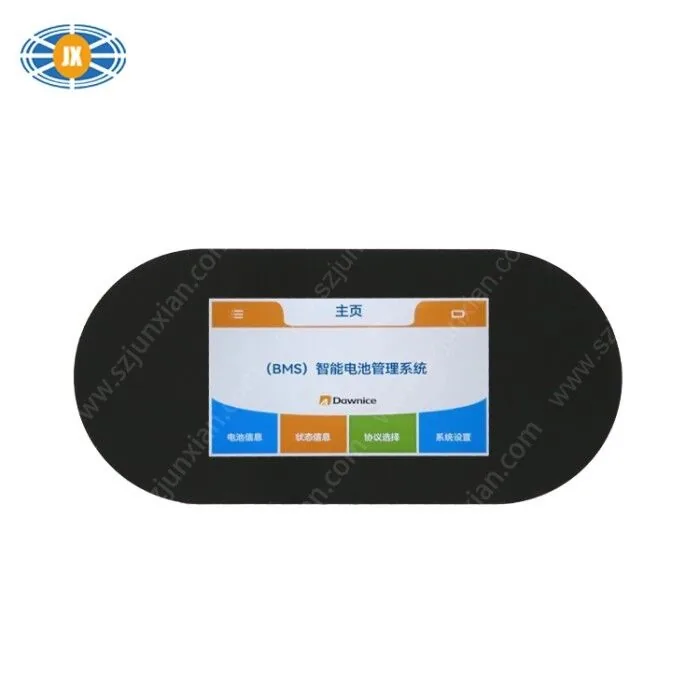
4.3 Inch BMS Serial Port Capacitive LCD Touch Screen 5V Full View Clea
JM-LH018-00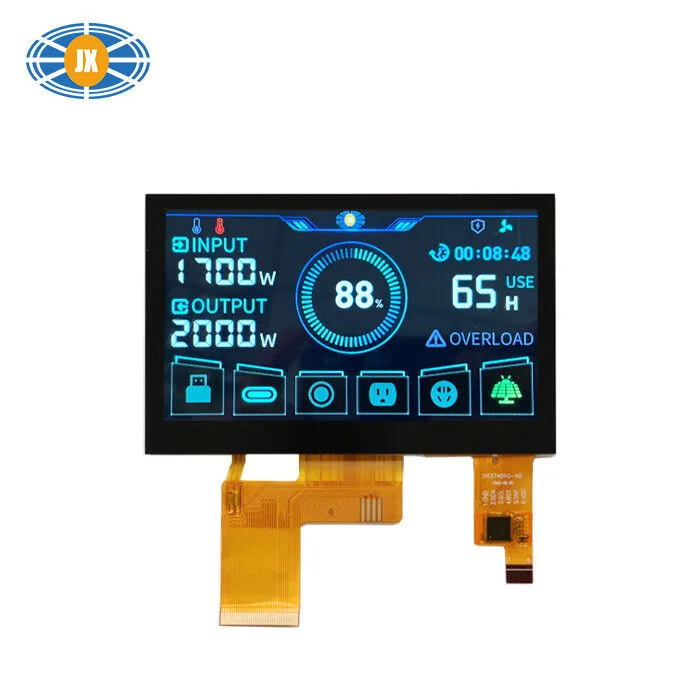
Customized TFT LCD Touch Screen 8 Bit RGB Interface 4.3 inch Capacitiv
JM-PT105-01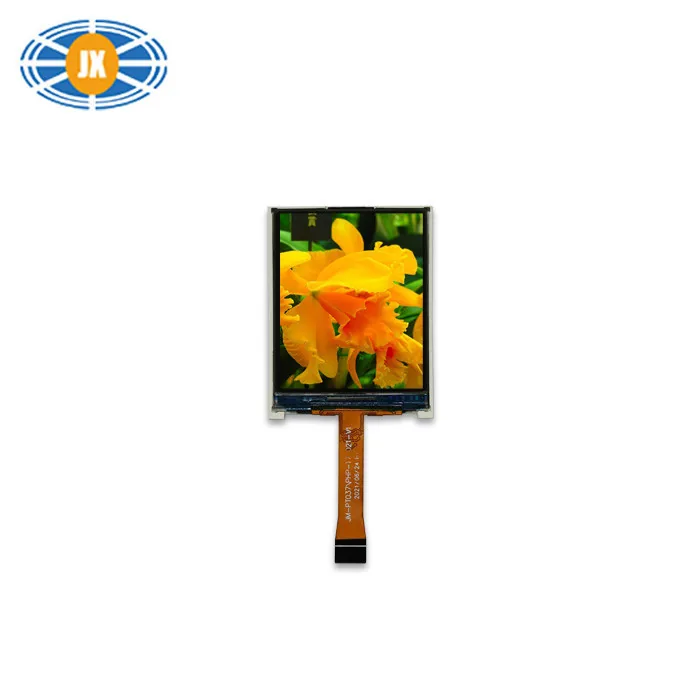
1.77 Inch TFT LCD Display 4 Bit 128×160 Pixels Color TFT Display SPI I
JM-PT037Related guides
When Your LCD Goes End-of-Life: Finding a Replacement
An EOL notice on a display is not a purchasing problem, it is a re-qualification problem. The fastest route is to define the repla...
LCD Module MOQ, Lead Time and Sample Policy
Samples 5 pcs. Catalogue models 100 pcs. Fully custom tooled glass 1,000 pcs. Production lead time 10-20 days, samples 10-15 days....
ST7789 / GC9A01 / ST7735 Init Problems: Offset, SPI Mode and CS
These three controllers sit behind most small SPI colour displays, and most “my display shows garbage / a shifted image / nothing”...
Questions engineers ask us about this
The cheap module works fine. Why pay more for the same thing?
It is the same thing until the batch changes. You are not paying for different glass - you are paying for knowing what is fitted, hearing about changes before they ship, and having a supply answer in two years. For a prototype that is worth nothing; for a product it is the difference between a firmware update on your schedule and a line-down surprise.
Can I just read the controller ID register instead of asking?
Partly. Many controllers report an ID you can read back, and it is a useful incoming check - but clones can report the original's ID, and the ID tells you nothing about the glass, backlight or mechanical revision. Read it, log it, and still require the change notice in writing.
Do you publish datasheets for your modules?
Every model page on this site carries the full parameter set, and the module datasheet is supplied with samples or on request before you order. Where a page deliberately does not name the controller - because the source can legitimately change - asking with a model number gets you the current IC and its init table.
What is a PCN and should I care at my volume?
A product change notice: the supplier tells you, in advance, that something in the module will change - controller, glass, flex, packing. At prototype volume you can ignore them; from the first production order onwards they are what stands between you and debugging a change you did not know happened.
Can you match a module I currently buy without documentation?
Usually, yes - send photos of both sides, the connector pin count and pitch, overall dimensions and whatever init code you are running, and we will identify the likely glass and controller and propose a documented equivalent. The replacement guide describes what to measure.
Need a quote or a datasheet?
Send us size, resolution, interface and annual quantity. Our engineers reply within one working day. Sample MOQ 5 pcs, lead time 10-20 days.