
How to Choose an LCD Module in Seven Decisions
Specifying a display is seven decisions, and their order matters more than any single one of them. Size and interface come first because they constrain everything downstream and are the most expensive to change late. Quantity comes last but decides which of the earlier answers you can afford. Work through them in this order and a supplier can quote you in one round.
Written by the Junxian applications engineering team. Figures quoted for “our models” are calculated from the 103 models on this site that carry a full parameter set, so they change when the catalogue changes.
The seven decisions, in order
| Decide | Decided by | Why it matters |
|---|---|---|
| 1. Size and outline | The enclosure opening, not the diagonal | A drawing of the opening beats a size in inches |
| 2. Interface | What your processor can drive | Wrong here = board respin later |
| 3. Resolution | What the UI needs, not what looks impressive | Higher resolution costs interface bandwidth and power |
| 4. Brightness and surface | Where the display physically sits | Indoor 200-300, window light 350-450, direct sun 500+ or transflective |
| 5. Touch | Who touches it and wearing what | Gloves and water change the whole stack |
| 6. Operating temperature | The coldest and hottest the display sees, not the room | Leave margin; -20 °C standard, -40 °C available |
| 7. Annual quantity | Honest forecast, not an inflated one | Decides the MOQ tier and whether tooling is worth it |
Send us these seven and you get a firm quotation in one round instead of three.
1-2. Size and interface: the two you cannot change late
Size is set by the enclosure opening, so send the opening dimensions rather than a diagonal - a 7-inch panel from two makers can have different outlines and different active-area positions. Interface is set by your processor: if it has a display controller, use what it drives; if it does not, use a serially driven small panel or a smart module that takes commands. Both of these are laid into the mechanical design and the carrier board, and both cost a respin to change afterwards.
Diagonal size and resolution alone do not tell you the physical width and height, or how sharp the UI will look - enter your numbers below to check both before you commit to an enclosure cutout.
Physical width and height are derived from the diagonal and the pixel aspect ratio, assuming square pixels - the same assumption almost every panel on this site uses. This runs entirely in your browser; nothing is sent anywhere.
3-4. Resolution and brightness: the two people over-specify
Higher resolution costs interface bandwidth, memory, power and money, and above a certain density the operator cannot see the difference at working distance. Pick the resolution your UI needs. Brightness follows where the display physically sits: 200-300 cd/m² indoors, 350-450 near windows or under a canopy, 500 and up in direct sun - and remember that the brightness you specify is what you pay for in power and backlight lifetime.
5-6. Touch and temperature: the two that hide surprises
Touch is not a yes/no question: gloves, wet hands, stylus use and cover glass thickness change the whole stack, and they are cheap to specify up front and expensive to retrofit. Temperature is about the coldest and hottest the display actually sees at its mounting position, not the ambient in the room, and about whether it has to start cold or only run cold.
7. Quantity: it decides which answers you can afford
Annual quantity sets the MOQ tier and whether tooling makes sense. An honest forecast is worth more than an impressive one - a price quoted against a volume you do not reach helps nobody. Below 1,000 pcs, adapting an existing panel is almost always the better commercial route, and often technically identical.
What is available at each tier
Before deciding, it helps to see the depth of what already exists - the more models in a category, the more likely your requirement is met without tooling:
| Category | Models published | Sizes | Catalogue MOQ |
|---|---|---|---|
| TFT LCD Display Modules | 36 | 0.96" - 15.6" | 100 pcs |
| LCD Touch Screen Modules | 22 | 2.8" - 10.1" | 100 pcs |
| Smart Serial UART LCD Modules | 5 | 2.8" - 4.3" | 100 pcs |
| OLED Display Modules | 10 | 0.49" - 2.42" | 100 pcs |
| Graphic LCD Modules | 21 | 1.5" - 5.7" | 100 pcs |
| Character LCD Modules | 7 | 3.2" | 100 pcs |
| Round LCD Displays | 2 | 1.28" - 3.4" | 100 pcs |
Catalogue MOQ is the same 100 pcs across categories - the tier is set by whether glass has to be tooled, not by product type.
The enquiry that gets a firm quotation in one round
Size (with the enclosure opening drawing), resolution, interface, touch requirement including glove use, brightness or the physical location, operating temperature range at the display position, and annual quantity. Add a photo of the current display if you are replacing one. Everything else - driver IC, FPC, connector, backlight colour - we can propose once those seven are known.
Where most enquiries start: colour TFT models
Published models that illustrate the point above - full specifications on each page.
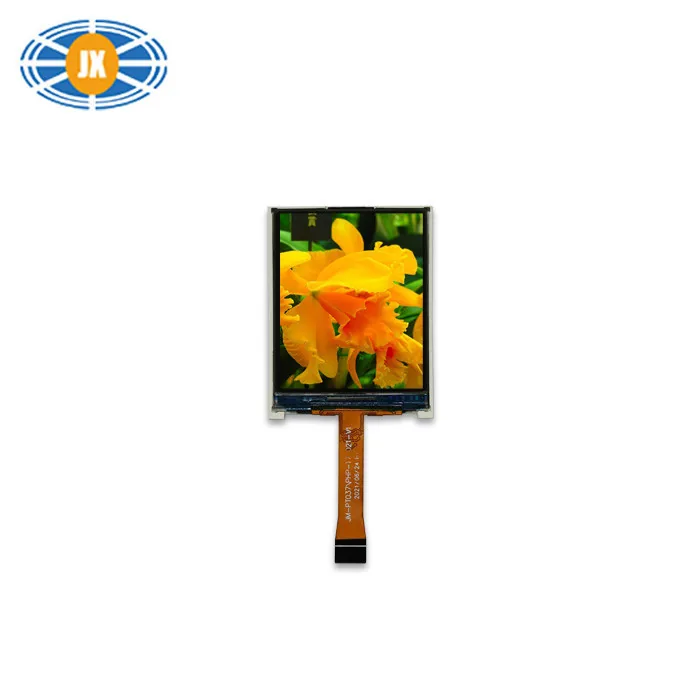
1.77 Inch TFT LCD Display 4 Bit 128×160 Pixels Color TFT Display SPI I
JM-PT037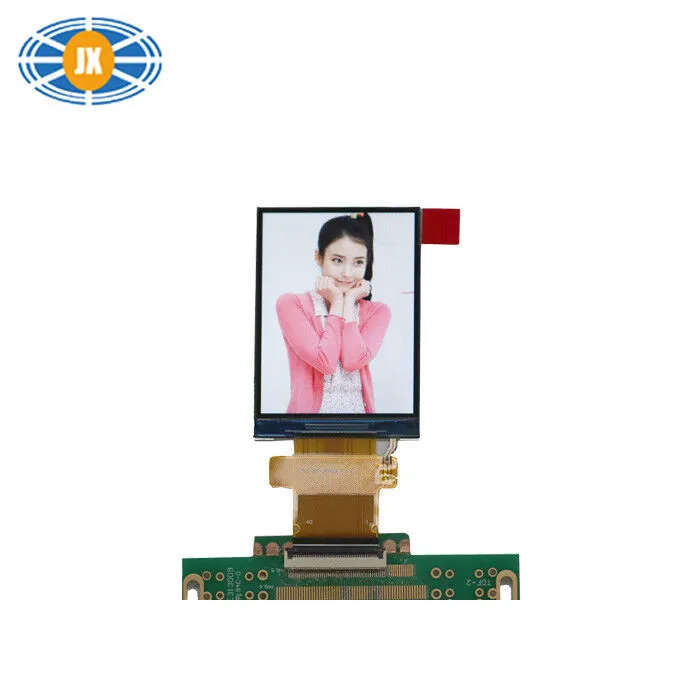
Custom 2.4 Inch TFT LCD Display 240×320 MCU Interface 350cd/m2 High Br
JM-PT090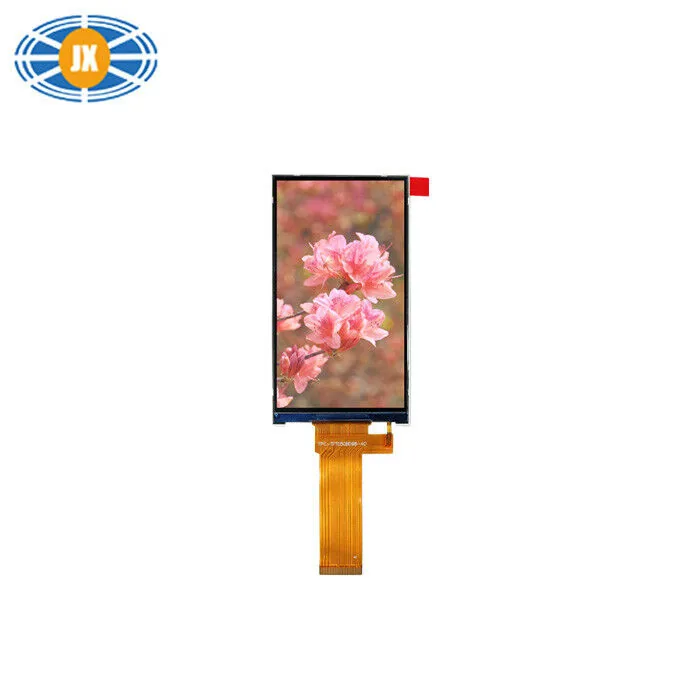
300cd/m2 5 Inch TFT LCD Monitor , IPS LCD Display Module 480x854 Pixel
JM-PT128-00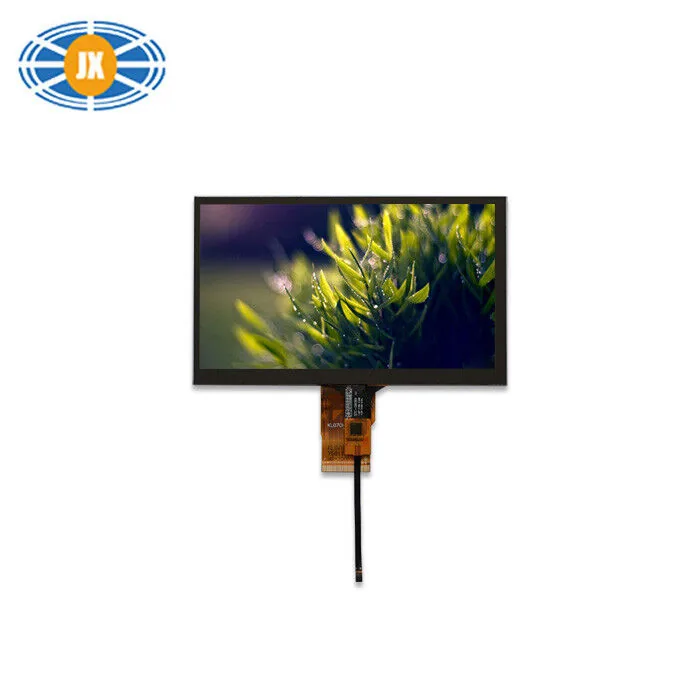
300cd/m2 High Brightness LCD Display 7 Inch 1024x600 For Automotive
JM-PT034Related guides
LCD Interfaces Explained: SPI, MCU, RGB, LVDS and MIPI
The interface is the first decision, not the last: it decides whether your processor can drive the panel at all, how many pins the...
TN, IPS, VA and STN: Which Glass Mode Should You Specify?
Glass mode decides how the display looks from where the operator actually stands. IPS holds colour and contrast off-axis and is th...
LCD Module MOQ, Lead Time and Sample Policy
Samples 5 pcs. Catalogue models 100 pcs. Fully custom tooled glass 1,000 pcs. Production lead time 10-20 days, samples 10-15 days....
Questions engineers ask us about this
What information do you need to quote a display module?
Seven values: size (ideally the enclosure opening drawing), resolution, interface, touch requirement, brightness or where it sits, operating temperature range, and annual quantity. With those we quote in one round instead of three.
How do I choose the right size?
From the enclosure opening and the viewing distance, not from the diagonal. Send the opening dimensions and we will tell you which outlines fit, including the active area position relative to the opening.
Should I choose a standard model or a custom one?
Start standard. Most requirements are met by a catalogue panel with FPC, connector, backlight or touch changes at 100 pcs. Tooling is worth it when the outline, shape or a segment layout genuinely cannot be matched.
Can you recommend a model if I am not sure what I need?
Yes, and that is a normal question rather than an awkward one. Tell us what the product does, where it is used and roughly how many you build a year, and our engineers will come back with two or three concrete options and the trade-offs between them.
How long from enquiry to samples?
10-15 days for a catalogue model once the specification is agreed, samples at 5 pcs. Custom glass follows the tooling cycle and is dated per project.
Need a quote or a datasheet?
Send us size, resolution, interface and annual quantity. Our engineers reply within one working day. Sample MOQ 5 pcs, lead time 10-20 days.