
Capacitive or Resistive Touch, Air Bonding or Optical Bonding
Capacitive touch wins on feel, multi-touch and durability, and it is what most buyers now specify by default. Resistive still beats it in three cases: thick or wet gloves, stylus precision, and a very low unit cost at small sizes. Bonding is a separate decision from the sensor - air bonding is cheaper and reworkable, optical bonding gives you better contrast in bright light and a stronger stack. Decide both before you ask for a price, because each one moves the quotation.
Written by the Junxian applications engineering team. Figures quoted for “our models” are calculated from the 103 models on this site that carry a full parameter set, so they change when the catalogue changes.
Which touch technology should I choose?
Start with who touches it and with what. Bare fingers or thin gloves in a clean environment: capacitive. Thick gloves, wet hands, a stylus, or an operator who presses hard because they are wearing PPE: resistive, or capacitive with a controller tuned for gloved use and the cover glass thickness chosen accordingly. Capacitive is not automatically better - it is better for most products, which is not the same thing.
Projected capacitive (CTP) in practice
A sensor grid under the cover glass senses the finger through the glass, so the surface is a single sealed sheet - easy to clean, no moving layer to wear out, and multi-touch if the controller supports it. The engineering variables that matter are cover glass thickness (thicker glass means weaker coupling, so it must be tuned against glove use), controller firmware tuning, and noise from the display and the power supply, which is why a touch stack should be validated as a stack rather than as three separately-purchased parts.
Resistive (RTP): still the right answer sometimes
Two conductive layers separated by spacer dots; pressure makes contact. It responds to anything that presses - gloves, a stylus, a pen cap - and it is insensitive to water on the surface. The costs are optical (an extra layer reduces transmission and adds reflection), mechanical (the top film wears with use) and functional (single touch only). For an instrument used with heavy gloves in the field, those trades are often still worth making.
Air bonding vs optical bonding
Air bonding leaves a gap between touch panel and display and joins them at the edges with tape. It is cheaper, lighter on tooling and reworkable - if one layer fails, the module can often be salvaged. Optical bonding fills the gap with adhesive: one internal reflection disappears, so contrast in bright light improves, the assembly resists impact better and cannot fog internally. It costs more, cannot practically be reworked and needs a cleanroom process. Outdoors, in handhelds and behind thick cover glass, optical bonding usually pays for itself; in an enclosed indoor panel it often does not.
What we build and what we need from you
| Item | What we publish |
|---|---|
| Models listing a touch option | 63 |
| Size range with touch available | 0.96" - 15.6" |
| Touch types built in-house | Capacitive (CTP, projected) and resistive (RTP, 4-wire) |
| Bonding methods | Air bonding (frame) and optical bonding (full lamination) |
| Cover glass | Thickness, outline, printing and hardening specified per project |
To quote a touch module we need the cover glass outline and thickness, whether the operator wears gloves, the mounting method (bezel or flush), the FPC exit direction, and whether the surface needs anti-glare. Those six answers are the difference between a firm quotation and three rounds of email.
How a touch stack should be validated before it ships
A touch module is three products stacked - display, sensor, cover glass - plus firmware, and it fails at the interfaces between them rather than inside any one part. That is why we validate the assembled stack rather than the components: linearity and edge accuracy across the whole active area including the corners, where bezel proximity distorts the field; response with the actual intended input, so a gloved application is tested gloved rather than with a bare finger; noise immunity with the display running and the backlight at full drive, because backlight switching noise is a common source of jitter that never appears in a bench test with the panel dark; and optical inspection for particles and bubbles trapped during bonding, which cannot be fixed after the adhesive cures. A golden sample is agreed before production and both sides check incoming goods against it - see our quality control page for how that runs.
Common mistakes in touch specification
Specifying a cover glass thickness first and expecting capacitive sensitivity to follow; forgetting that a metal bezel close to the sensor edge changes tuning; leaving the display's own noise out of the validation and finding jitter at the prototype stage; and choosing optical bonding for a product that will need field repair. All four are cheap to fix at the drawing stage and expensive after tooling.
Published models with a touch option
Published models that illustrate the point above - full specifications on each page.
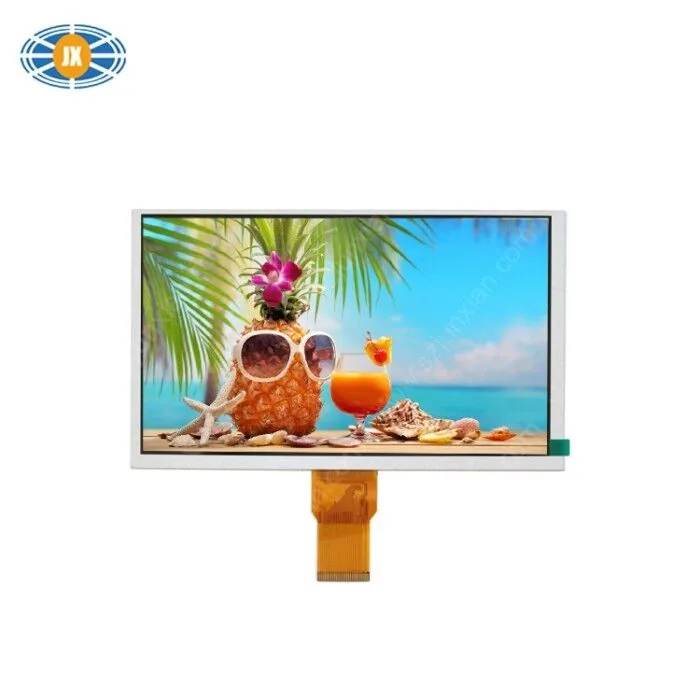
9 Inch TFT Display 1024x600 Touch Screen LCD Monitor For Industrial /
JM-PT144-00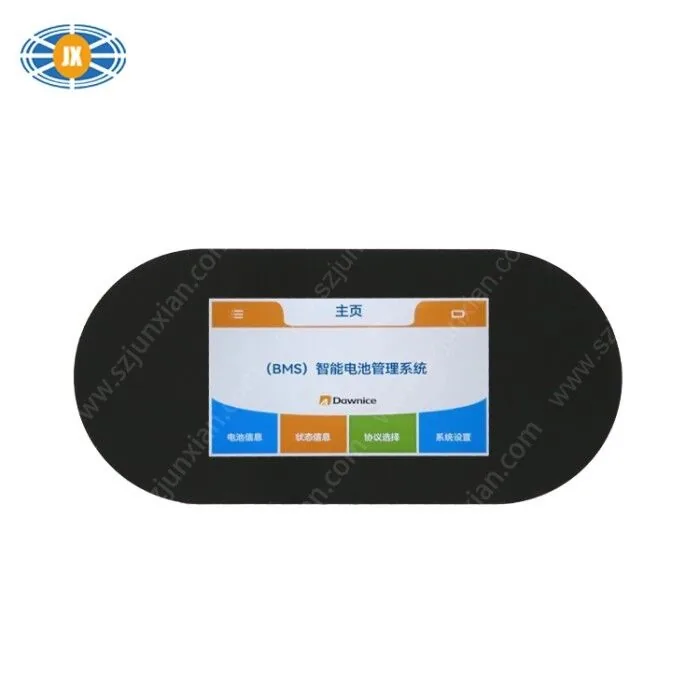
4.3 Inch BMS Serial Port Capacitive LCD Touch Screen 5V Full View Clea
JM-LH018-00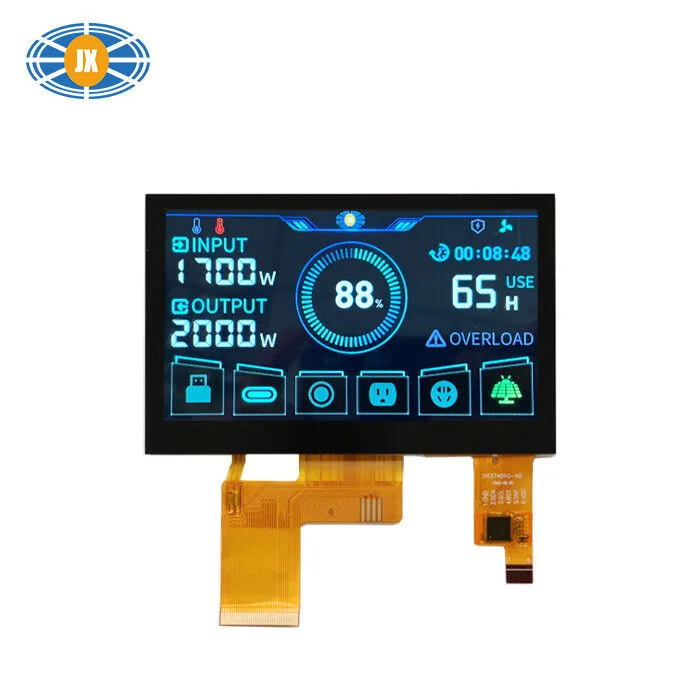
Customized TFT LCD Touch Screen 8 Bit RGB Interface 4.3 inch Capacitiv
JM-PT105-01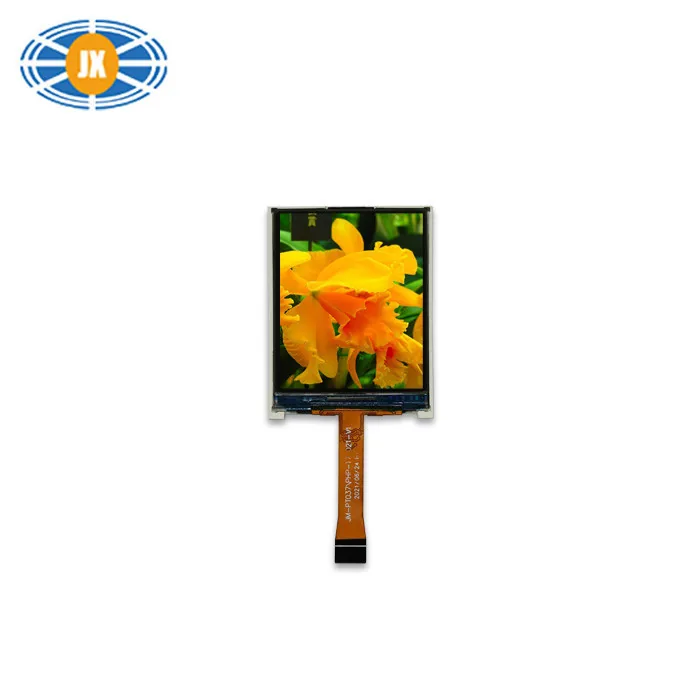
1.77 Inch TFT LCD Display 4 Bit 128×160 Pixels Color TFT Display SPI I
JM-PT037Related guides
How Many Nits Does a Sunlight-Readable Display Need?
Short answer: 200-300 cd/m² indoors, 350-450 cd/m² for shaded outdoor or a window-lit factory, and 500 cd/m² or more - or a transf...
How a Custom LCD Module Is Developed, Step by Step
Most 'custom' display projects are not custom glass at all - they are an existing panel with a different FPC, connector, backlight...
LCD Interfaces Explained: SPI, MCU, RGB, LVDS and MIPI
The interface is the first decision, not the last: it decides whether your processor can drive the panel at all, how many pins the...
Questions engineers ask us about this
Can capacitive touch work with gloves?
Often yes, with thin gloves, a tuned controller and a cover glass thickness chosen for it. Thick or wet gloves are more reliable on resistive touch. Tell us the actual glove and we will specify the stack rather than guess.
Is optical bonding worth the extra cost?
Outdoors and in handheld devices, usually yes - better contrast in bright light, stronger assembly, no internal fogging. For an enclosed indoor panel that may need field repair, air bonding is often the better commercial choice.
Do you bond the touch panel in-house?
Yes, both air and optical bonding are done in-house, which is what lets us quote the stack rather than pass the question to a third party.
What is the MOQ for a custom touch module?
100 pcs where the touch sensor and cover glass are existing parts with minor changes; 1,000 pcs where a new sensor pattern or new cover glass tooling is needed. Samples 5 pcs.
Can you match our existing cover glass design?
Send the drawing with outline, thickness, printing and any cut-outs. Cover glass is specified per project - printing colour, hardening and anti-glare treatment included.
Need a quote or a datasheet?
Send us size, resolution, interface and annual quantity. Our engineers reply within one working day. Sample MOQ 5 pcs, lead time 10-20 days.