
Backlight Lifetime: What '40,000 Hours' Actually Means
A backlight lifetime figure looks like a single fact. It is actually a measurement taken under specific conditions, and the gap between that measurement and your product's real operating conditions is exactly what determines whether the number on the datasheet matches what you see in the field.
Written by the Junxian applications engineering team. Figures quoted for “our models” are calculated from the 103 models on this site that carry a full parameter set, so they change when the catalogue changes.
The measurement itself
A published LED backlight lifetime is normally an L50 figure: the number of hours of continuous operation, at the panel's rated drive current and a stated ambient temperature (typically 25 °C), before brightness decays to 50% of its initial value. It is not a failure point - the backlight is still lit at that hour count, just dimmer than when new - and it is measured under continuous full drive, not the on/off duty cycle most real products actually use.
We correct our own figures publicly when they do not hold up: an earlier version of this site carried both "40,000 hours" and "50,000 hours" for the same backlight family, copied from two different source documents without being reconciled. The correct, verified figure for our current catalogue is 40,000 hours; the discrepancy was in the paperwork, not the parts, and we would rather say so than leave two numbers standing.
What shortens it in the real world
- Higher drive current. Brightness and lifetime trade off directly - pushing more current for a brighter panel ages the LEDs faster, which is why a high-brightness variant of a panel family is rarely rated for the same hours as the standard version.
- Elevated ambient temperature. LED lifetime drops as junction temperature rises; a backlight running hot inside a sealed enclosure ages faster than the same part in open air, even at identical drive current.
- Continuous full-on duty. The rated figure assumes continuous operation at full brightness. A display that is dimmed, blanked or duty-cycled when not actively read accumulates far fewer "full brightness hours" over its calendar life than the L50 figure implies.
Reading it as a design input, not a warranty term
Treat the published figure as a starting point for a calculation specific to your product, not as a guarantee: take the rated hours at rated current and ambient, then discount it for your actual duty cycle and enclosure temperature. A display that runs at 60% brightness inside a fan-cooled enclosure will comfortably outlive one running at full brightness inside a sealed outdoor box, even with identical parts.
Extending it: dimming, PWM vs DC drive, and duty cycling
Three practical levers, in order of how much control they usually take:
- Reduce average brightness wherever the ambient light allows it - even a modest reduction from maximum meaningfully extends life, because the current-to-lifetime relationship is not linear.
- PWM dimming (switching the backlight fully on and off rapidly rather than reducing DC current) is what most of our smart serial and TFT modules use for brightness control, and generally ages the LEDs closer to their low-duty-cycle lifetime than continuous reduced-current drive.
- Duty-cycle the display - blank or dim it during genuine idle periods rather than leaving it at full brightness around the clock. This is the single biggest lever on equipment that is not read continuously.
To estimate the current your backlight design actually draws at a given LED count and drive current, use the calculator below.
Estimate only - actual figures depend on the specific backlight driver and string layout on your model's datasheet. This runs entirely in your browser; nothing is sent anywhere.
Published models with a stated backlight lifetime
Published models that illustrate the point above - full specifications on each page.
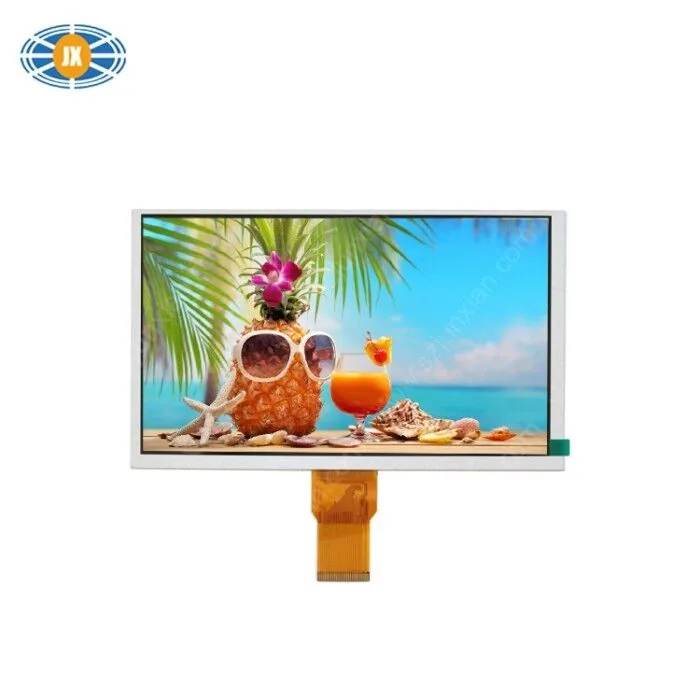
9 Inch TFT Display 1024x600 Touch Screen LCD Monitor For Industrial /
JM-PT144-00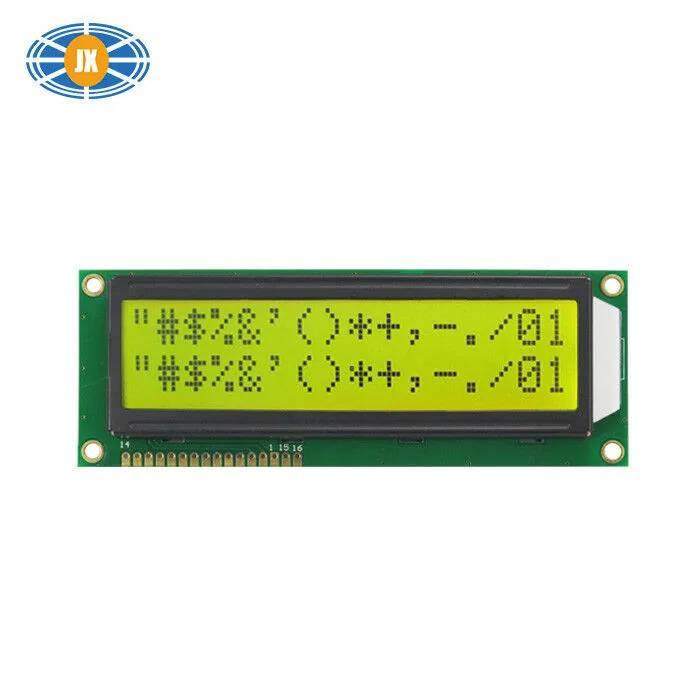
LCD 16x2 Alphanumeric Display 16 PIN Flexible LCD Modules With Multi C
JM1602M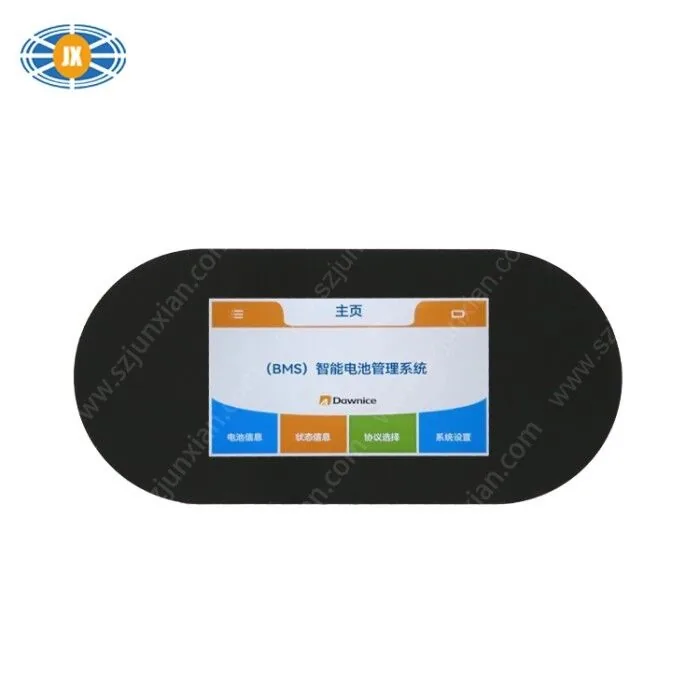
4.3 Inch BMS Serial Port Capacitive LCD Touch Screen 5V Full View Clea
JM-LH018-00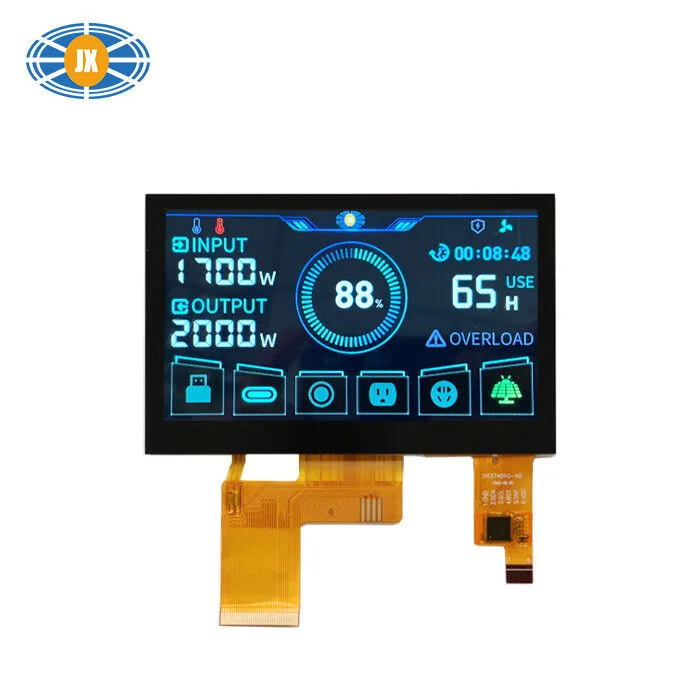
Customized TFT LCD Touch Screen 8 Bit RGB Interface 4.3 inch Capacitiv
JM-PT105-01Related guides
How Many Nits Does a Sunlight-Readable Display Need?
Short answer: 200-300 cd/m² indoors, 350-450 cd/m² for shaded outdoor or a window-lit factory, and 500 cd/m² or more - or a transf...
Wide-Temperature LCD Modules: Designing for -40 to +85 Celsius
Standard commercial panels stop around 0 °C. Our standard industrial parts run -20 °C to +70 °C and wide-temperature parts -40 °C ...
Industrial OLED Lifetime, Burn-In and How to Design Around It
OLED gives up backlight lifetime for contrast, power efficiency at low brightness and a thinner module than any backlit panel on t...
Questions engineers ask us about this
Is 40,000 hours a guarantee?
No - it is a decay measurement (time to 50% brightness) under stated conditions, not a warranty term or a hard failure point. The display keeps working past that hour count, just at reduced brightness.
Why do some of your pages say different backlight hour figures?
They should not - 40,000 hours is the verified figure for our current catalogue. If you see a different number anywhere on this site, treat this page and the specific model's own product page as authoritative and tell us; it is the kind of paperwork error we would rather fix than leave standing.
Does dimming the backlight actually extend its life?
Yes, meaningfully - lifetime and drive current are directly related, so running at lower average brightness (whether by reduced current or PWM duty) extends real service life well past the full-brightness rated figure.
Can I get a backlight rated for longer than 40,000 hours?
Ask - lifetime, brightness and cost interact, and a lower-brightness or lower-duty-cycle specification for your actual use case may already get you further than the rated figure implies before any special part is needed.
Need a quote or a datasheet?
Send us size, resolution, interface and annual quantity. Our engineers reply within one working day. Sample MOQ 5 pcs, lead time 10-20 days.